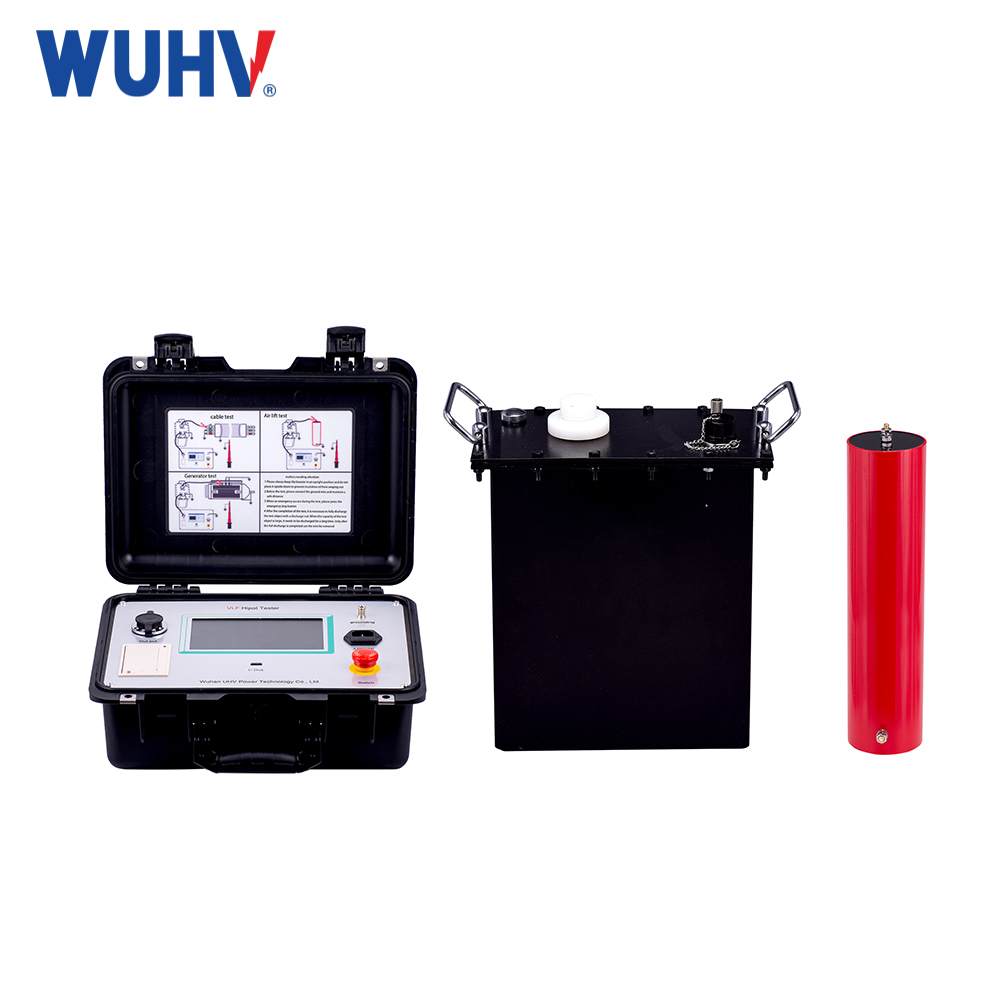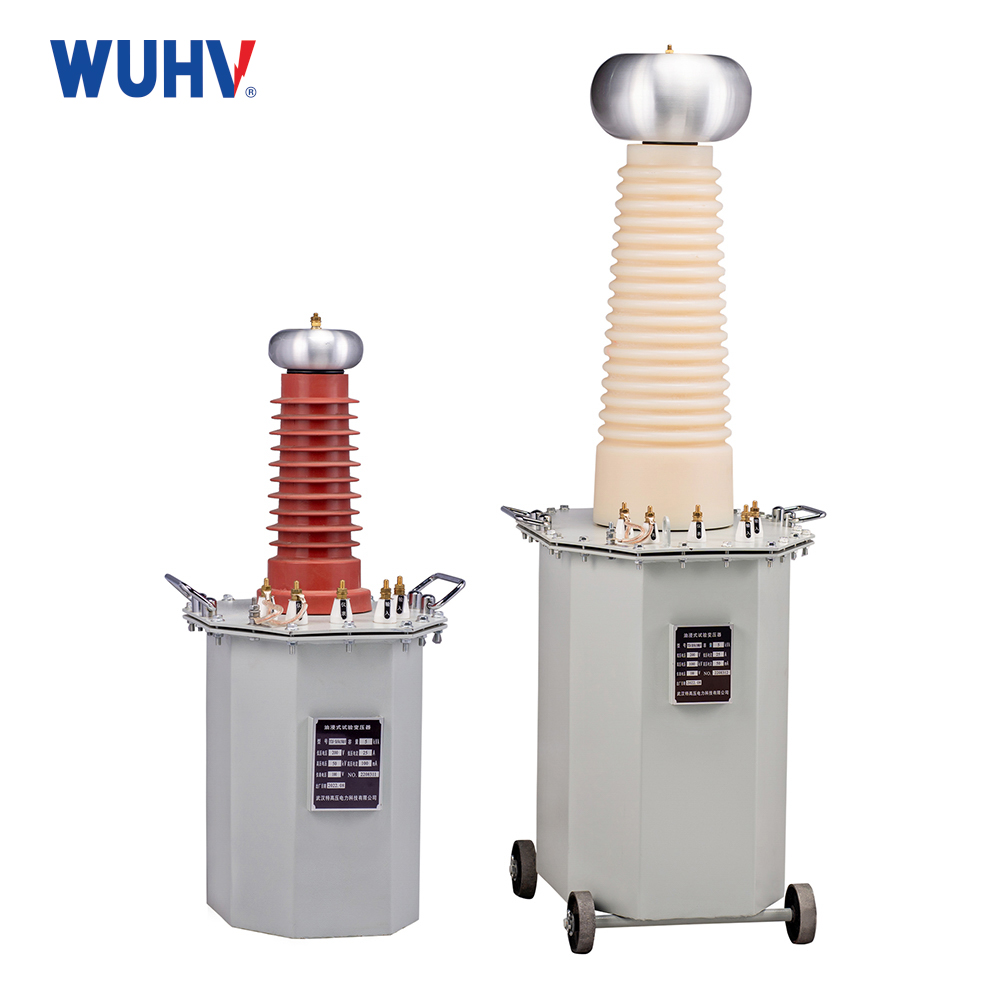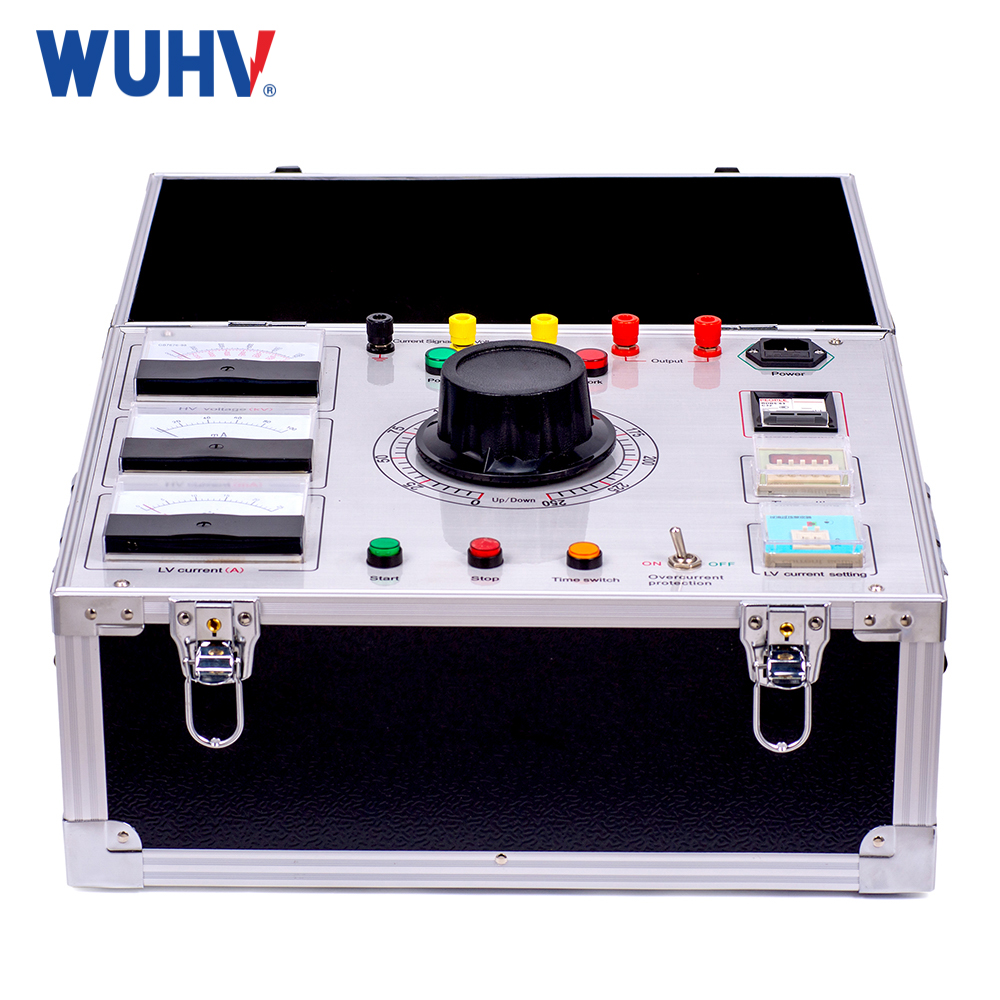


Product Introduction
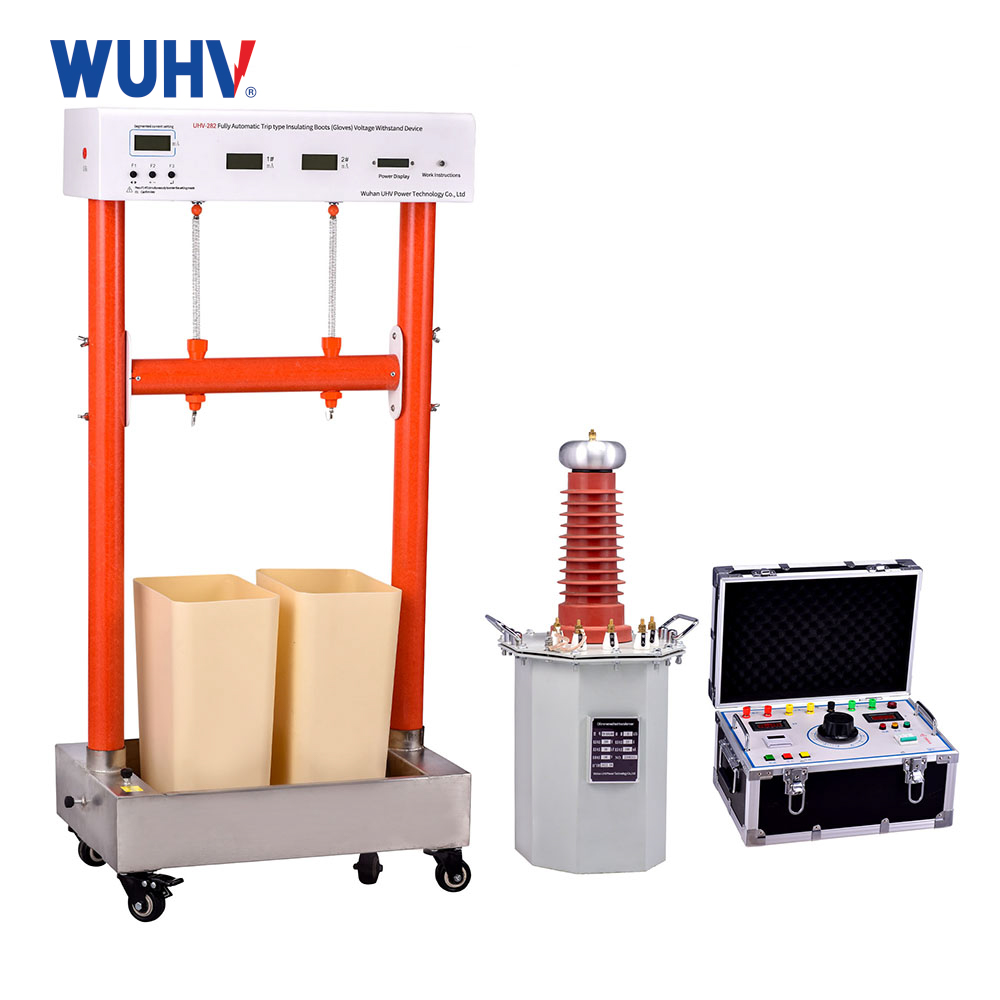
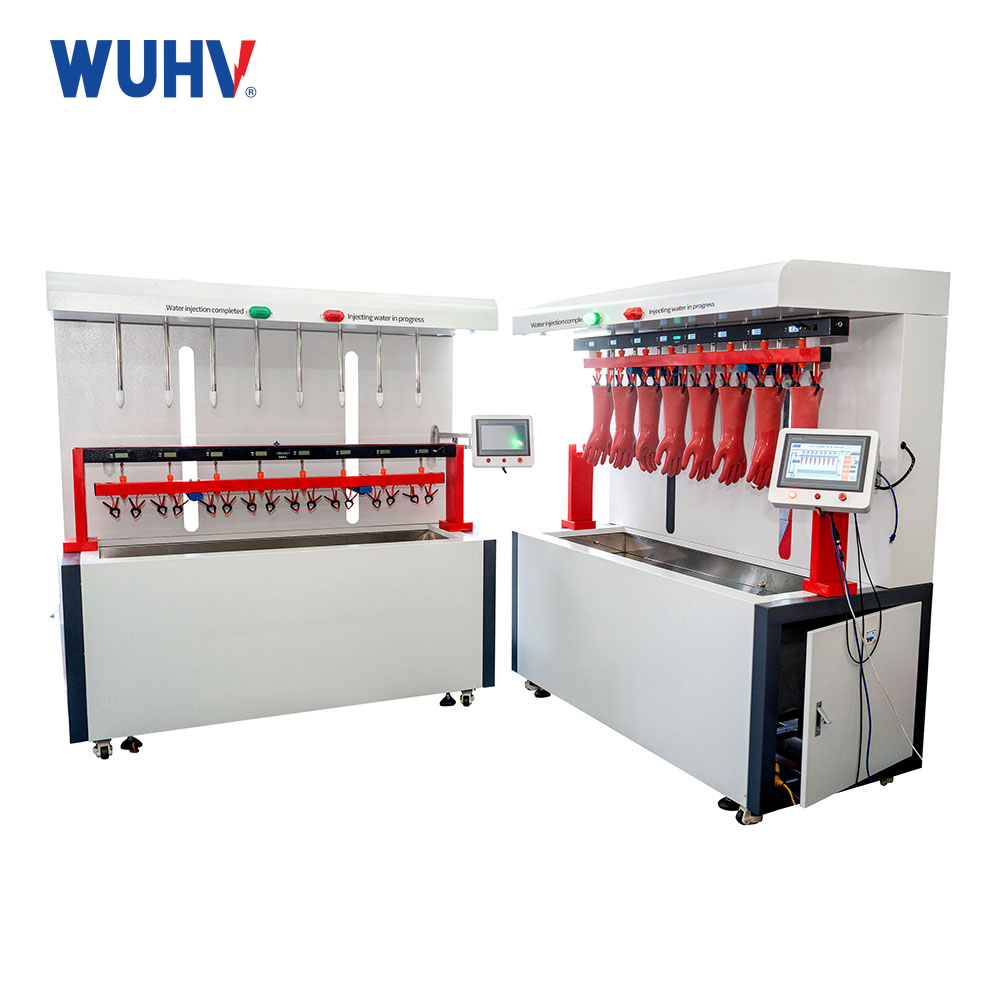
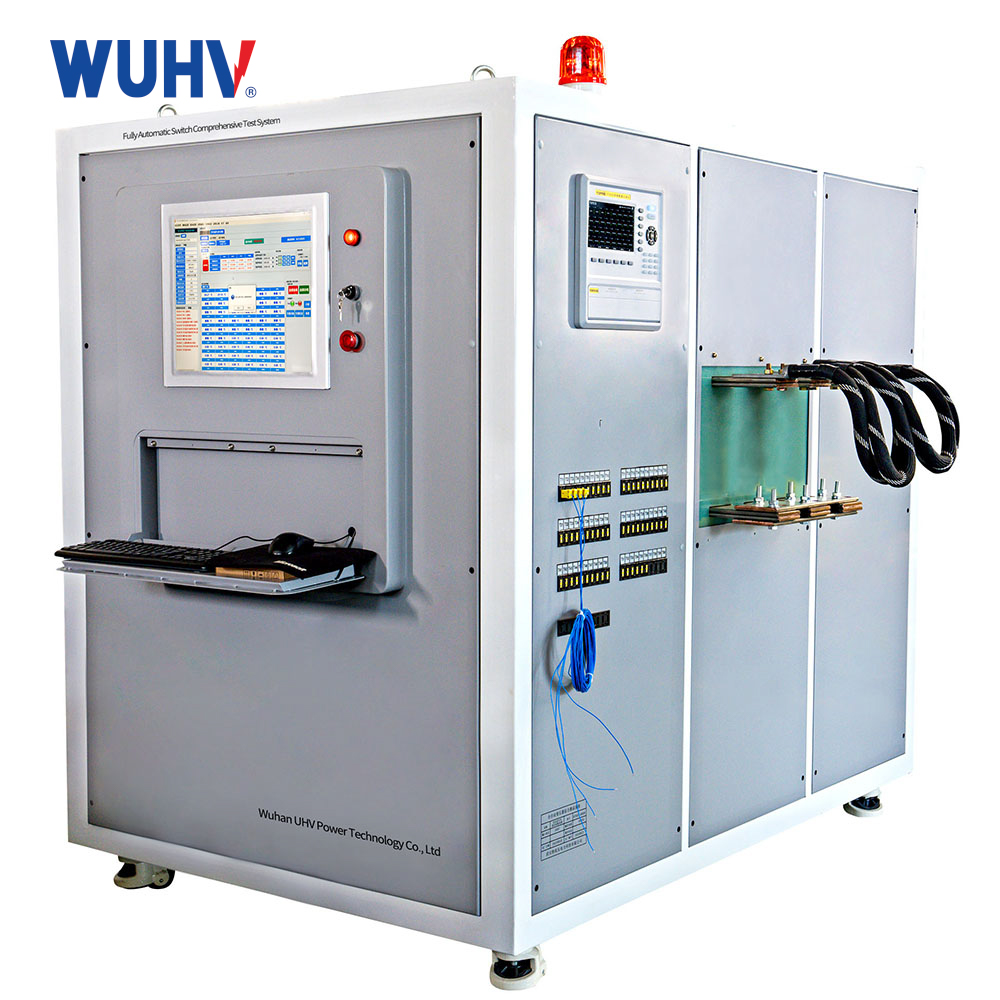
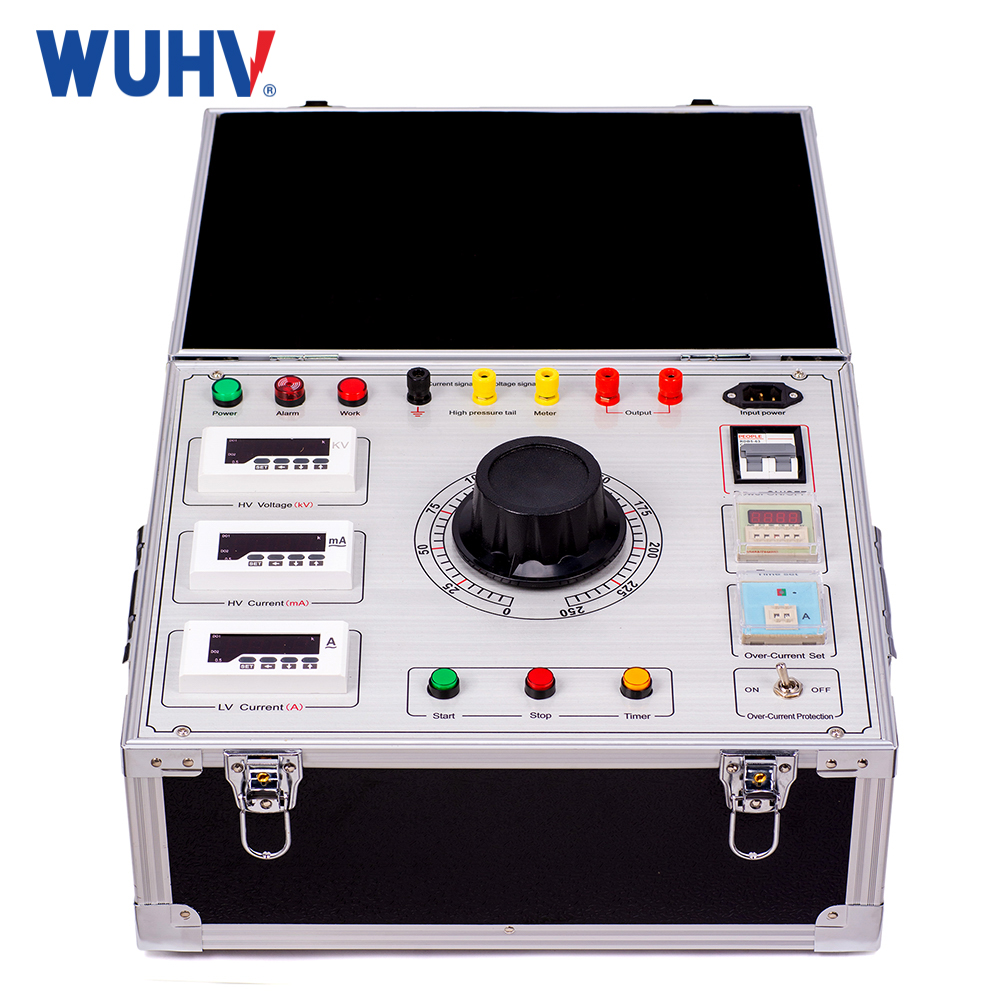
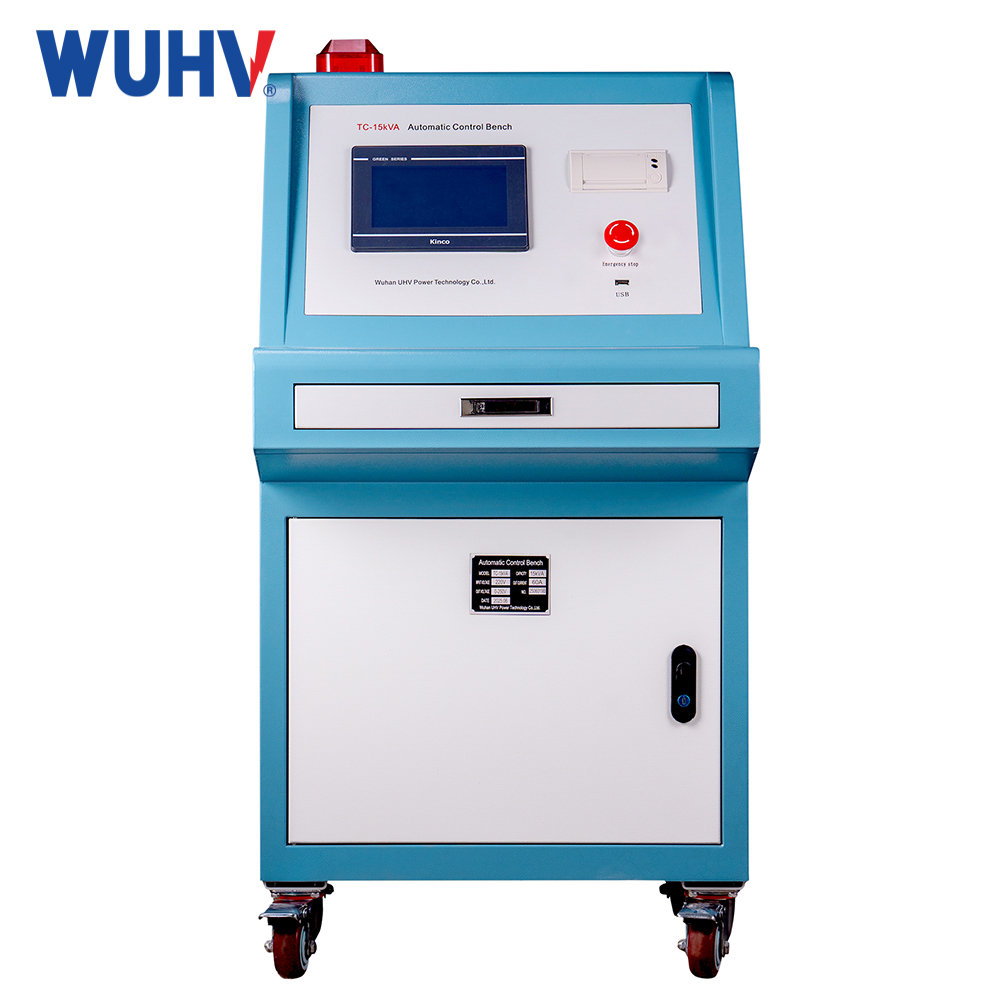
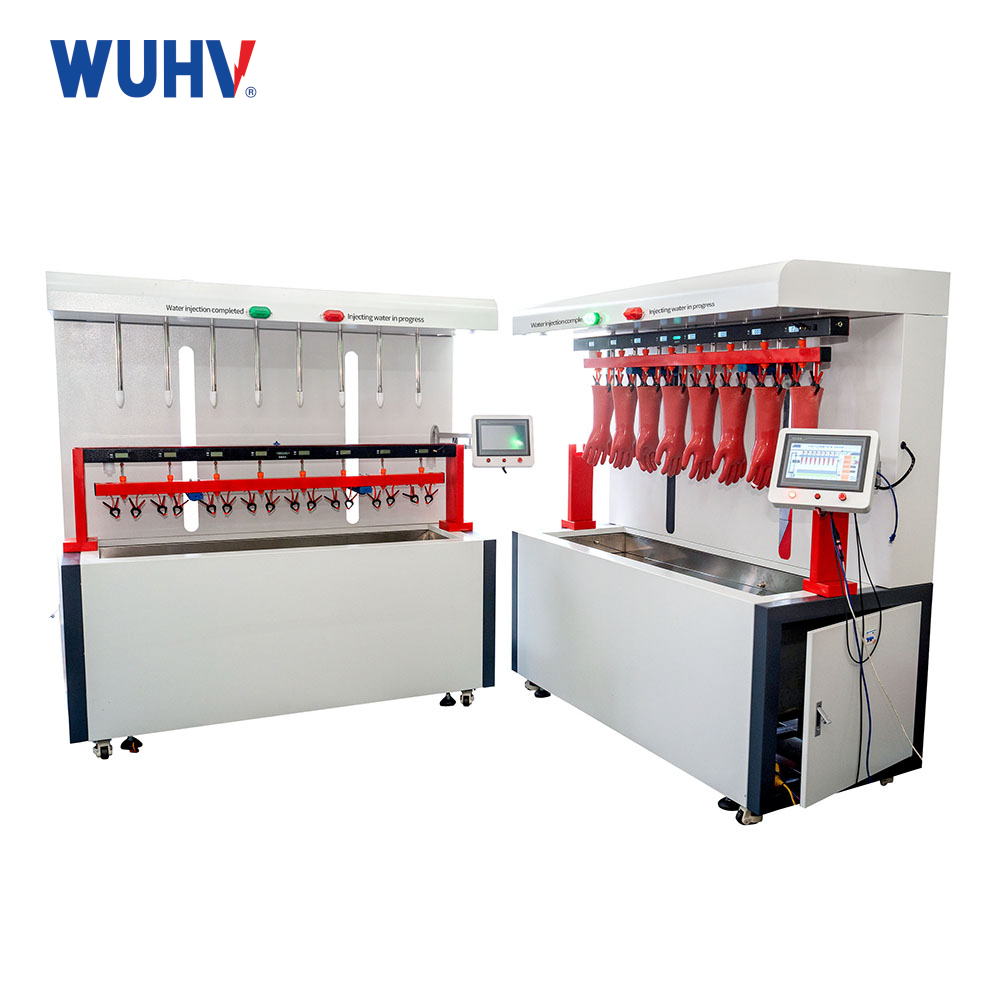
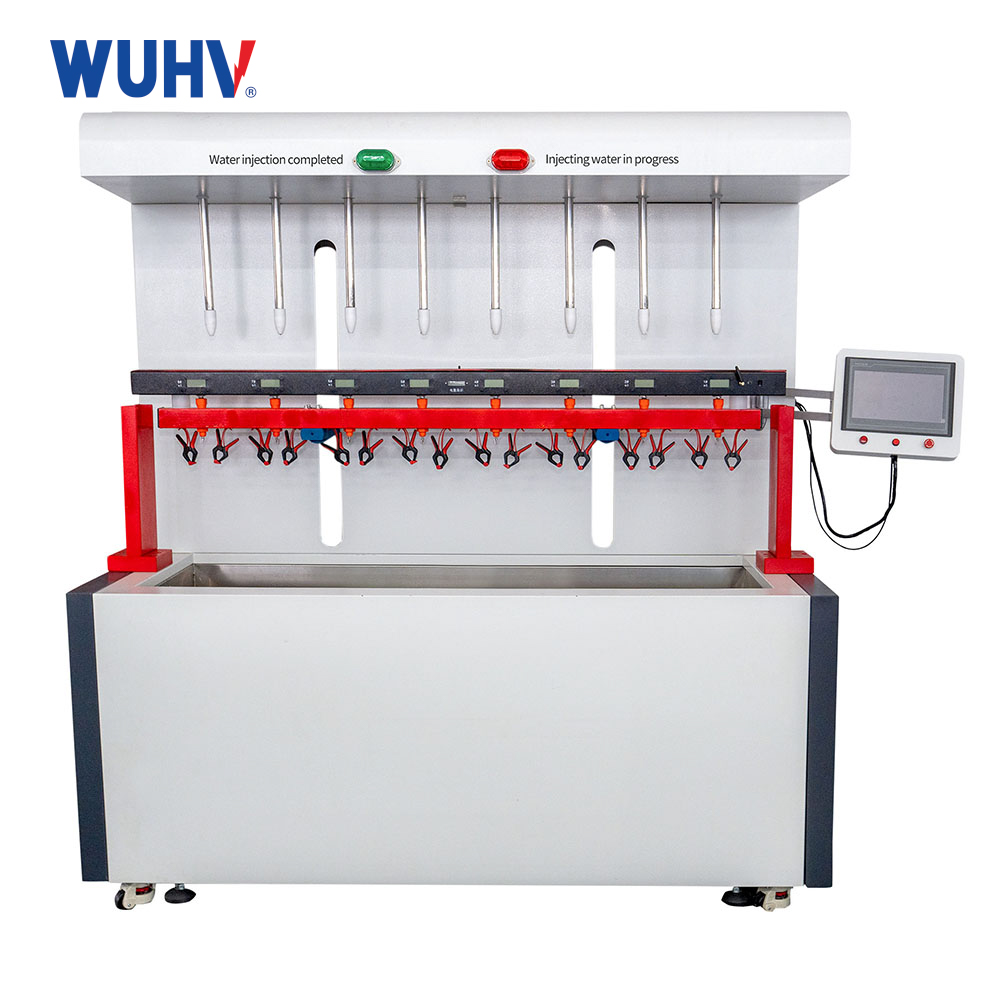
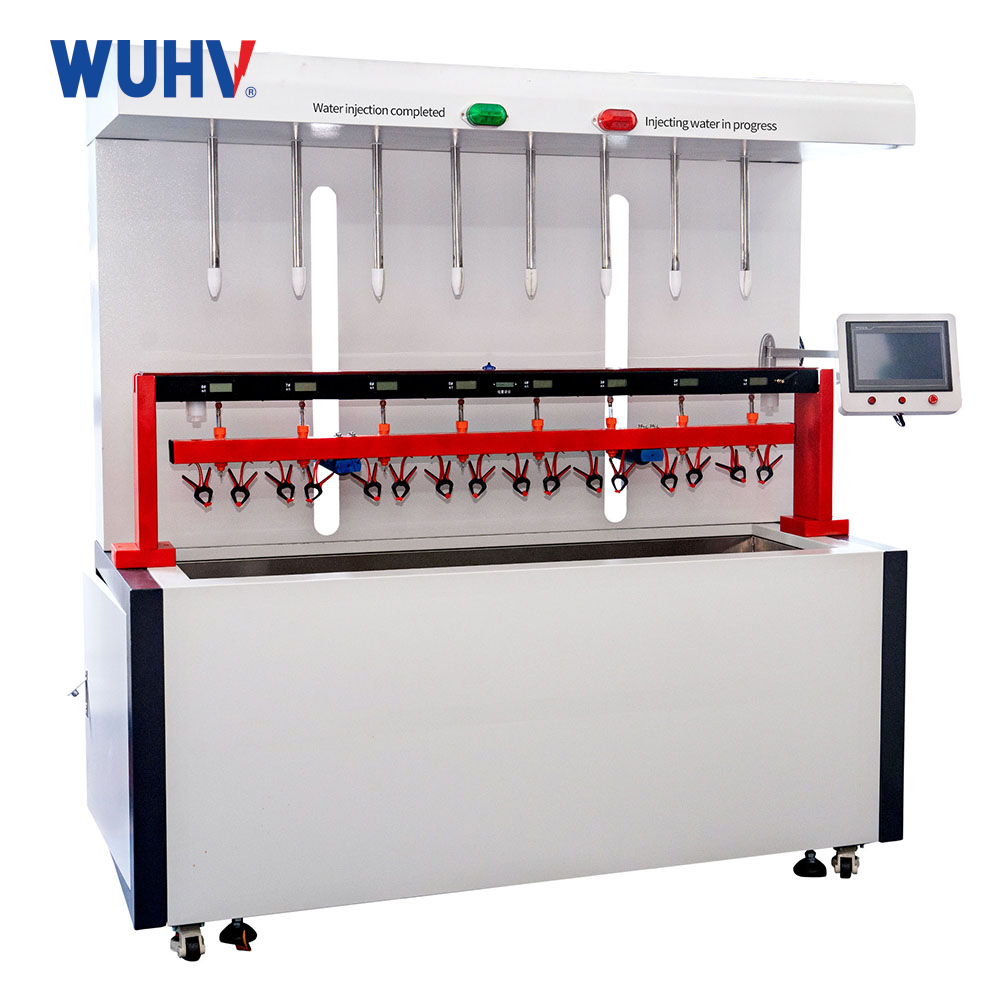
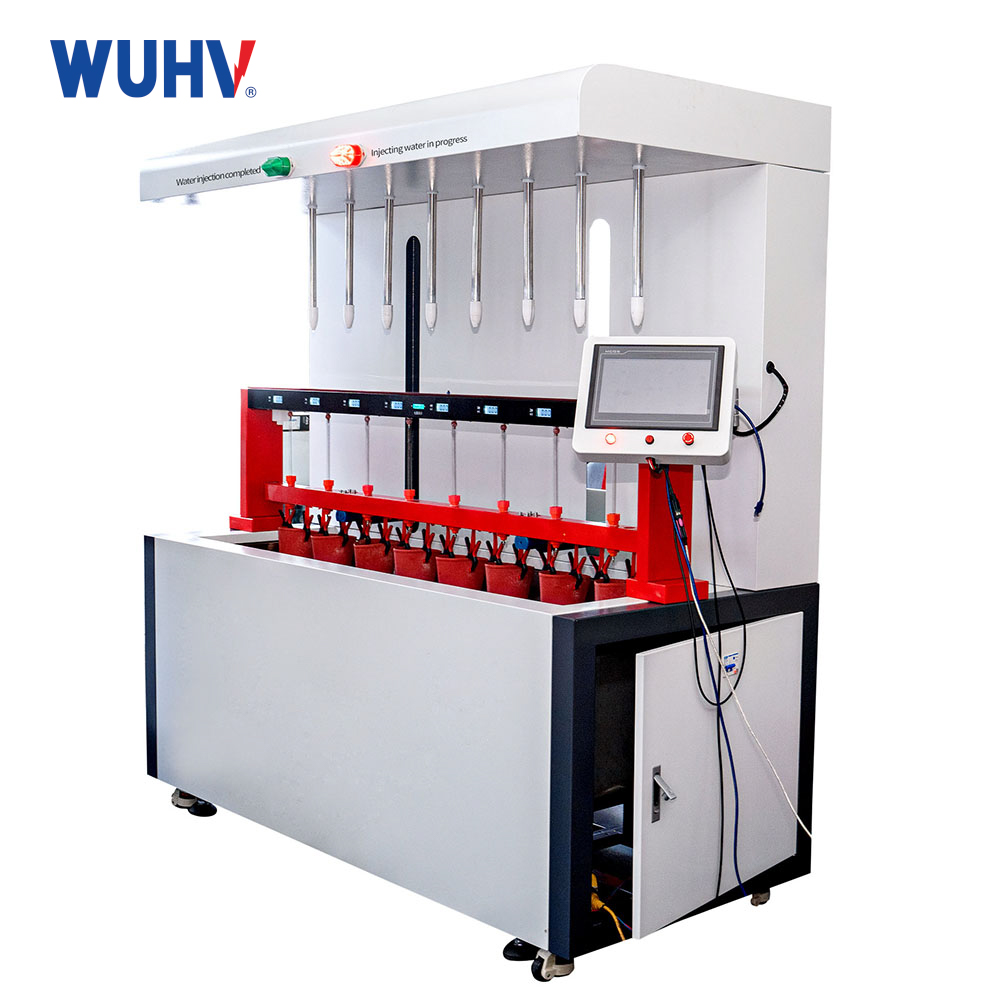
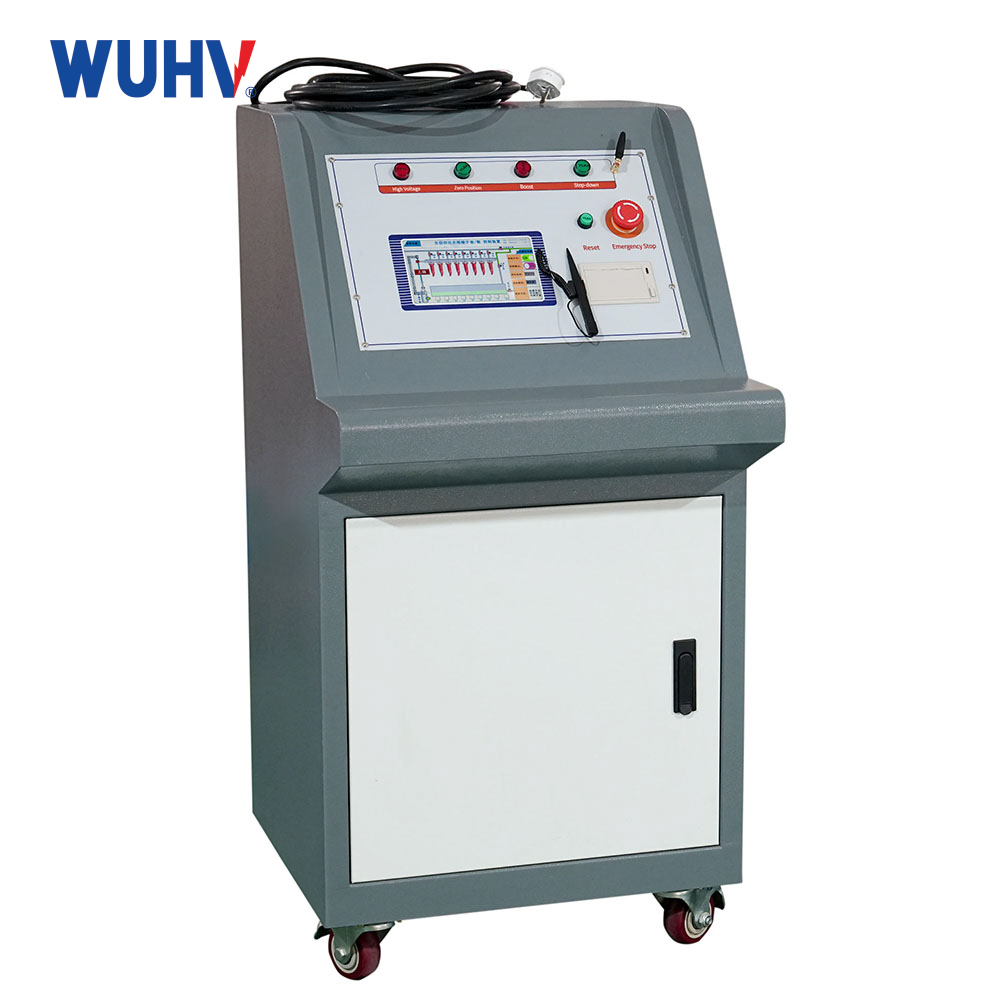
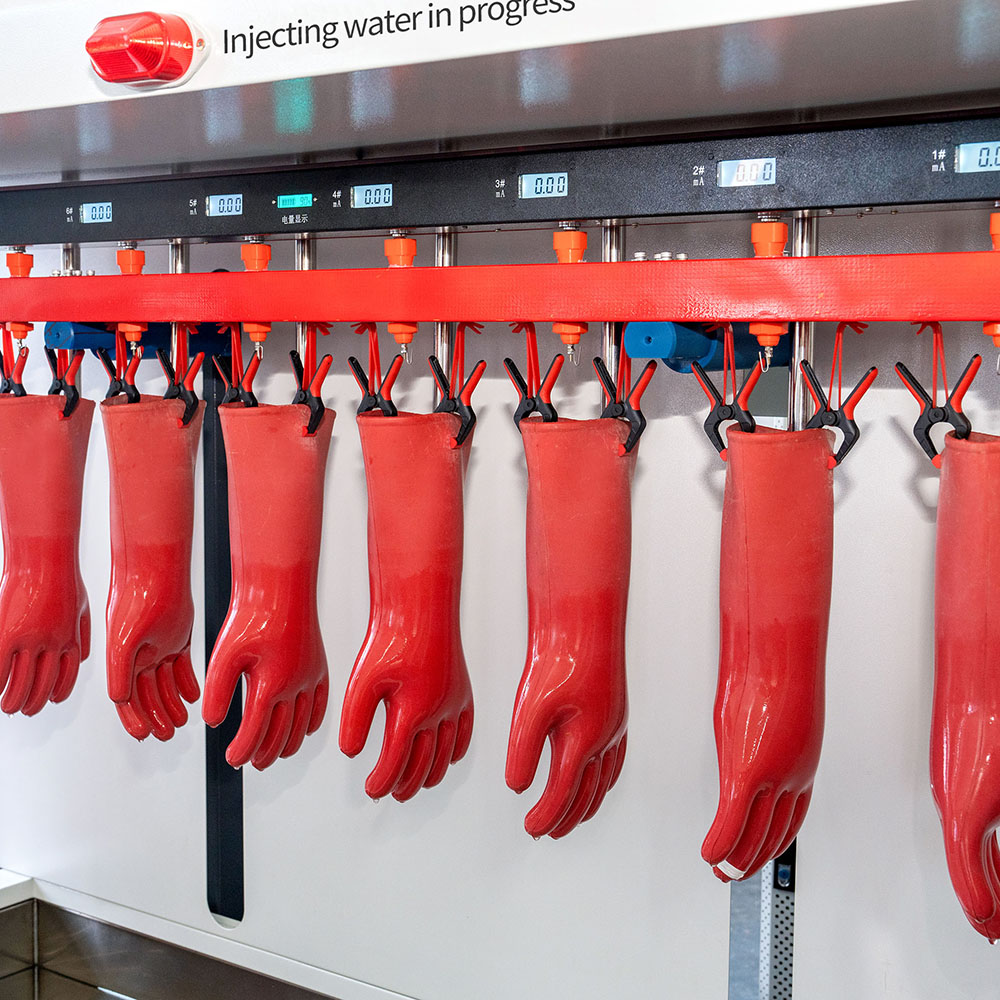
The UHV-283 Fully Automatic Water Injection Insulating Boot (Glove) Withstand Voltage Test Device is an intelligent testing device specifically designed for insulation performance testing of electrical safety tools. It is mainly used for power-frequency withstand voltage testing and leakage current detection of insulating protective products such as insulating boots and insulating gloves.
|
Product Functions
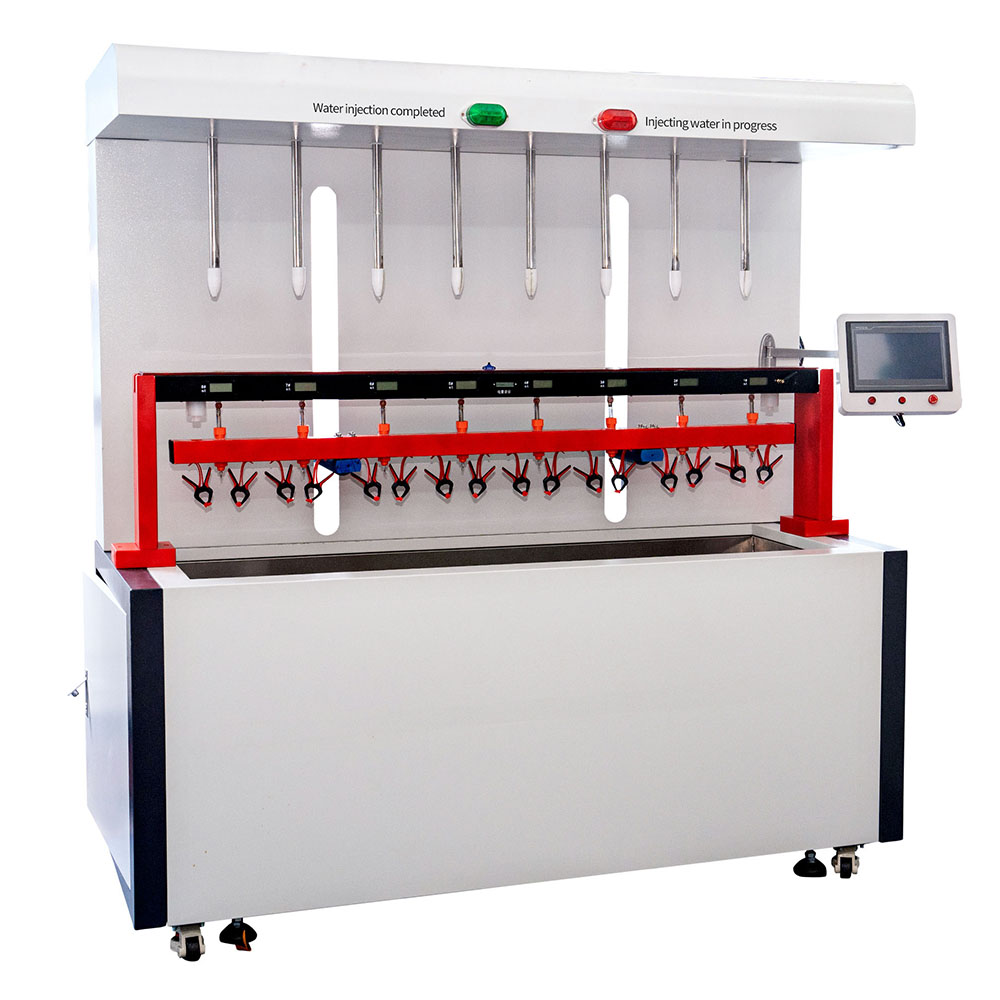
Fully automatic water injection: Automatically controls internal and external water levels, ensuring consistent test conditions and reducing human error.
Automatic voltage rise and fall: Completes voltage increase, hold, and decrease according to the preset program without manual intervention.
Multi-station testing: Can test multiple insulating boots or insulating gloves simultaneously, improving testing efficiency.
Independent leakage current detection: Displays the leakage current of each test sample in real time, accurately determining whether it passes or fails.
Product parameters
Intelligent insulation withstand voltage test for safety tools such as insulated shoes and gloves
teknik parametreler
Device output voltage range | AC 0~50kV (0~250V) |
Rated output capacity of the device | 5kVA |
Device input current | 0~20A |
Leakage current measurement range | 0~30.0mA (0~50mA can be customized) |
Kaçak akım ölçüm hatası | 1%±3 words |
Kaçak akım çözünürlüğü | 0.01 mA |
Gerilim ölçüm hatası | ≤1% indication value ±0.1% range |
Current measurement error | ≤1% indication value ±0.1% range |
Digital display timing | 0 ~ 999S |
Overall dimensions of console | 1300×940×860(mm) |
Dimensions of the water injection unit | 1900×950×1860(mm) |
Console weight | 50kg |
Injection weight | 200kg |
Product Characteristics
1、Whole machine is controlled by high-speed single-chip microcomputer, with high degree of automation and simple operation
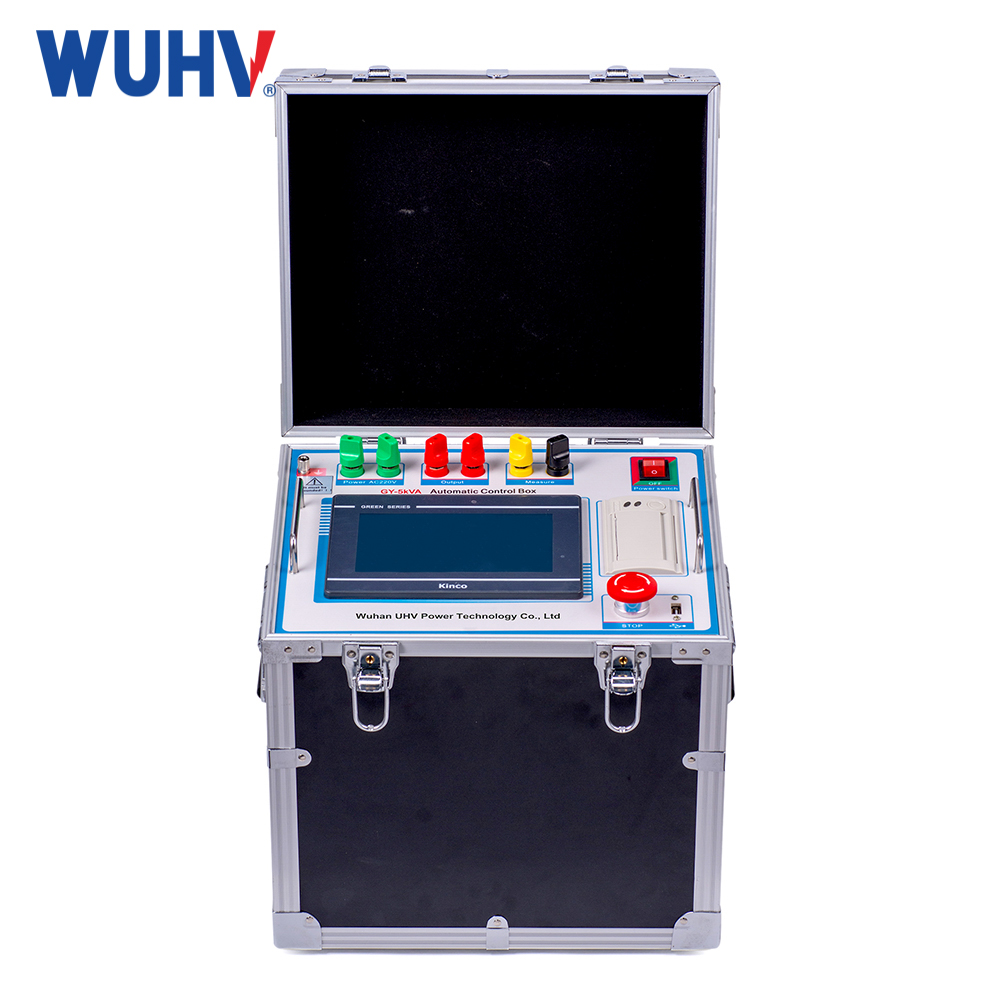
2、Application of high frequency switch power supply technology, suitable for large and medium-sized transformerdc resistance measurement with large current output
3、Perfect protection function, can reliably protect the impact of counterpotential to instrument, and the performance is more reliable
4、with sound discharge alarm, clear discharge indication, reduce misoperation
5、With fast response time, the measurement state can be used to directly pick up switch with load points, and instrument can automatically refresh data
6、The vertical chassis structure is adopted to facilitate the use of scene
7、Intelligent power tube technology: instrument always works in the minimum power state, effectively reducing the heat inside instrument and saving energy. Work for hours without interruption
8、Dot matrix LCD, Chinese menu, printout
Product Advantages
1. Enhanced Safety and Efficiency: The automatic water injection system and dry test method for boots eliminate manual water filling and drying, greatly improving testing efficiency and reducing operator workload.
2. High Accuracy and Reliability: The wireless leakage current transmission, individual breaking mechanisms, and high-precision stepper motor control ensure accurate and reliable test results that comply with national standards.
3. User-Friendly Operation: The PLC control, one-key water injection, touch screen interface, and status warnings throughout the water injection process make the device easy to operate and maintain.
4. Comprehensive Data Management: The system can be equipped with upper computer software for full-process control, data display and measurement, report generation and printing, and data upload.
5. Flexible Configuration: The test transformer ratio can be set according to the configured transformer, allowing compatibility with the customer's existing transformer.
Application Scenarios
1. Safety tool testing in power systems
Used in power utilities such as State Grid, China Southern Power Grid, local power supply companies, and transmission and distribution operation and maintenance units for periodic preventive testing of in-service insulating boots and insulating gloves. This ensures that safety tools used by frontline workers maintain good insulation performance, providing reliable protection for live-line work and equipment maintenance.
2. Power plants and substations
Thermal power plants, hydroelectric plants, wind farms, photovoltaic plants, and various substations need to regularly test insulating protective equipment used by operating personnel. The fully automatic water injection withstand voltage device factory can quickly complete batch testing, improving maintenance efficiency and ensuring personnel safety during equipment maintenance and switching operations.
3. Power safety tool testing centers
Safety tool testing organizations at various levels, quality inspection centers, and third-party testing laboratories handle large volumes of insulating tool testing tasks. The water injection insulating boot withstand voltage device supports multi-station simultaneous testing, automatic data recording, and test report generation, meeting the needs of batch testing and standardized management, while improving testing efficiency and result consistency.
4. Industrial enterprises and large industrial users
Industries such as petrochemical, chemical, metallurgy, coal mining, steel, and aluminum electrolysis involve high-voltage electrical equipment operation. Enterprises need to regularly test insulating boots and gloves used by employees. Automatic testing equipment reduces human operational errors, improves testing accuracy, and ensures electrical safety at production sites.
5. Railway and rail transit industries
Railway power supply systems, urban rail transit, and metro organizations widely use insulating protective equipment during overhead line maintenance and electrical repairs. This equipment can perform periodic withstand voltage testing on insulating boots and insulating gloves used by maintenance personnel, ensuring operational safety.
6. Electrical equipment manufacturers
Manufacturers of insulating protective products and high-voltage electrical equipment can use this equipment for factory quality inspection and type testing of products, verifying that insulation performance meets relevant technical standards, and improving product quality and market competitiveness.
|
|
FAQ
Q: What is the fully automatic water injection insulating boot (glove) withstand voltage device primarily used to test?
A: The fully automatic water injection insulating boot (glove) withstand voltage device manufacturer is primarily used to test the insulation performance of insulating boots, insulating gloves, and other electrical safety protective products. Through power-frequency withstand voltage testing and leakage current detection, it determines whether the test samples have issues such as insulation aging, moisture ingress, damage, or degraded insulation performance.
Q: What role does the fully automatic water injection system play in insulating boot (glove) testing?
A: Withstand voltage testing of insulating boots and insulating gloves typically requires injecting a certain level of water into the interior as a conductive medium to simulate actual working conditions.
The automatic water injection system can:
Precisely control water injection height;
Ensure consistent test conditions between different samples;
Reduce manual water filling errors;
Improve test repeatability;
Simplify the test preparation process.
Q: Which application scenarios are most suitable for the fully automatic water injection insulating boot (glove) withstand voltage device?
A: This equipment is primarily used in industries and organizations that require regular testing of insulating protective products.
Typical applications include:
Safety tool testing in power utilities: Used for periodic testing of insulating boots and insulating gloves used by substation, transmission line, and distribution operation and maintenance personnel.
Safety tool testing centers: Meets the needs of centralized testing, data management, and report output for large volumes of safety tools.
Power plants and industrial enterprises: Ensures the reliability of protective equipment used by maintenance personnel during high-voltage equipment maintenance.
Insulating product manufacturers: Used for factory inspection and quality control of products.
Water injection instructions
1.The test bench consists of two parts: an automatic water injection device and a testing machine device. The testing machine part is connected to the high-voltage connection and the shell part through insulation connection.
2.The water injection device factory includes a water pump, solenoid valve, and lifting motor. First, ground the test bench casing and connect it to an AC220V power supply. The test bench has an inlet and an outlet. The inlet is used to add water to the tank, and the outlet is used to drain the tank.
3.Connect the water pipe to the inlet, open the water valve to fill the water tank with water, and then close the water valve. Attention: Do not leave when filling the sink to prevent water from overflowing.
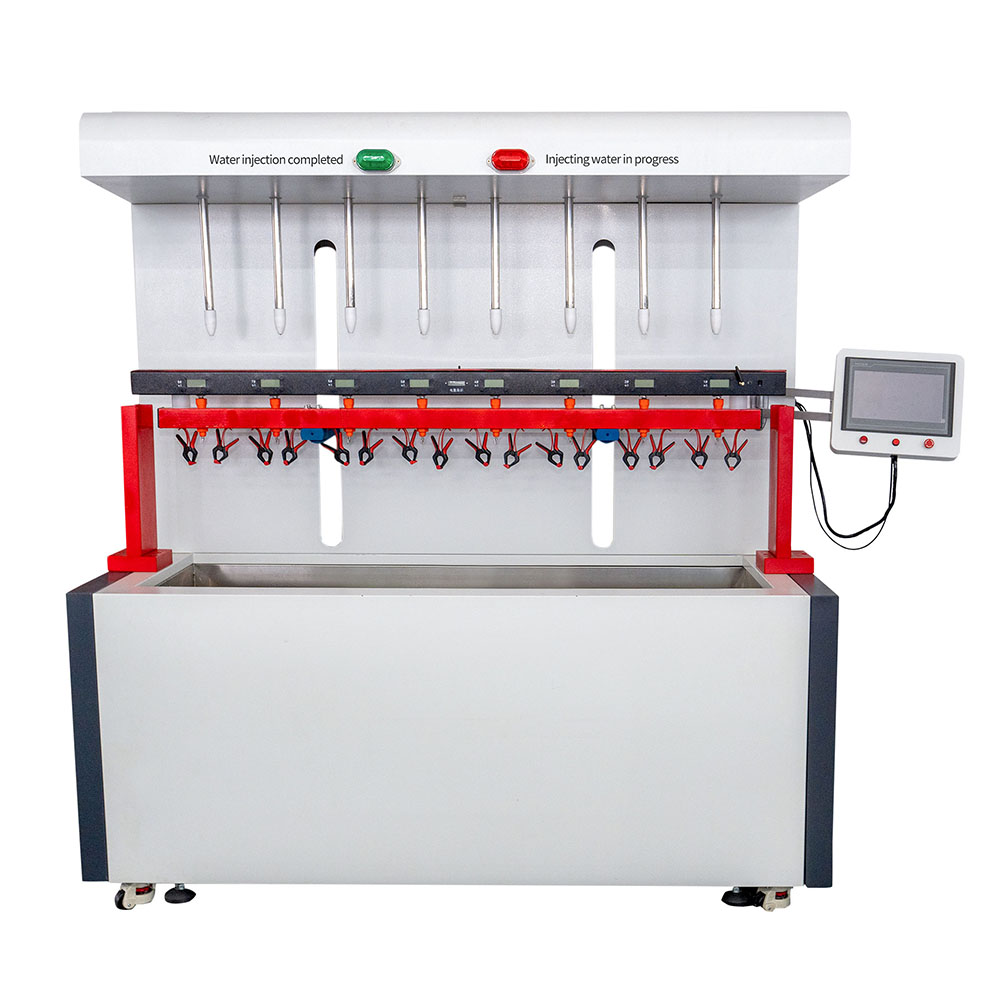
4.The automatic water injection insulated boots device supplier uses recycled water. When the power supply of the test bench is turned on, the power indicator light will light up and the system will be in standby mode. There are two buttons on the control panel in front of the test bench, namely the glove test button and the emergency stop button. When a test sample is installed on the water tank test stand, press the glove to test. The water injection device will descend and insert the water injection port into the test sample. Then, inject water into the test sample (only those with the test sample installed will be injected) until all injected water reaches the required water level for the test. The water injection device will automatically lift and return to its initial position, completing the water injection process.
5.Adopting touch screen display and parameter settings.
Charging instructions:
The testing machine needs to be charged before high-voltage testing. Insert the charger into the charging port of the testing machine, connect 220V power to charge the battery, and the "charging" and "battery voltage" indicators will light up. As the battery level continues to increase, the "battery voltage" indicator light will be lit one after another. When the battery is fully charged, the "fully charged" indicator light will turn on. Generally, charging takes 2-8 hours. If the battery is not used for a long time, it should be charged and discharged once every 1-2 months.
Wuhan UHV Power Technology Co., Ltd. has been deeply engaged in the field of high-voltage power testing equipment for over 20 years.
As a direct-sale manufacturer with our own factory, we combine large-scale production capacity with a strict quality control system, ensuring stable and reliable product performance while offering you more competitive factory-direct prices.
Our core products cover a wide range of high-voltage testing equipment to meet diverse testing requirements. In addition, we can provide professional technical support and flexible customized solutions according to different project specifications.