In the maintenance and testing of electrical equipment, the measurement of DC resistance is a crucial step that cannot be ignored. It's like giving a 'health check' to the device, which can help us detect potential problems in a timely manner. What is a DC resistor? Why is its measurement so crucial? What other useful tools can help us handle it? Today, let's talk about this topic.
What is a DC resistor?
Simply put, DC resistance is the obstruction encountered by current flowing in a DC circuit. Imagine the water flow in a pipe. If there are wrinkles or blockages in the pipe, the water flow will be obstructed, just like a resistor in an electrical circuit. For electrical equipment, its conductive components (such as transformer windings, switch contacts, etc.) have a certain resistance.
What are the factors that affect DC resistance?
The material itself: Different conductive materials, such as copper and aluminum, have different electrical resistivity.
Length and cross-sectional area: The longer the length of the conductor, the greater the resistance; The larger the cross-sectional area, the smaller the resistance.
Temperature: The resistance of most materials increases with an increase in temperature.
Connection quality: Whether the contact points are good or not, and whether additional contact resistance will be generated due to oxidation or loosening, directly affecting the overall measurement results.
Which tool can help us measure efficiently?
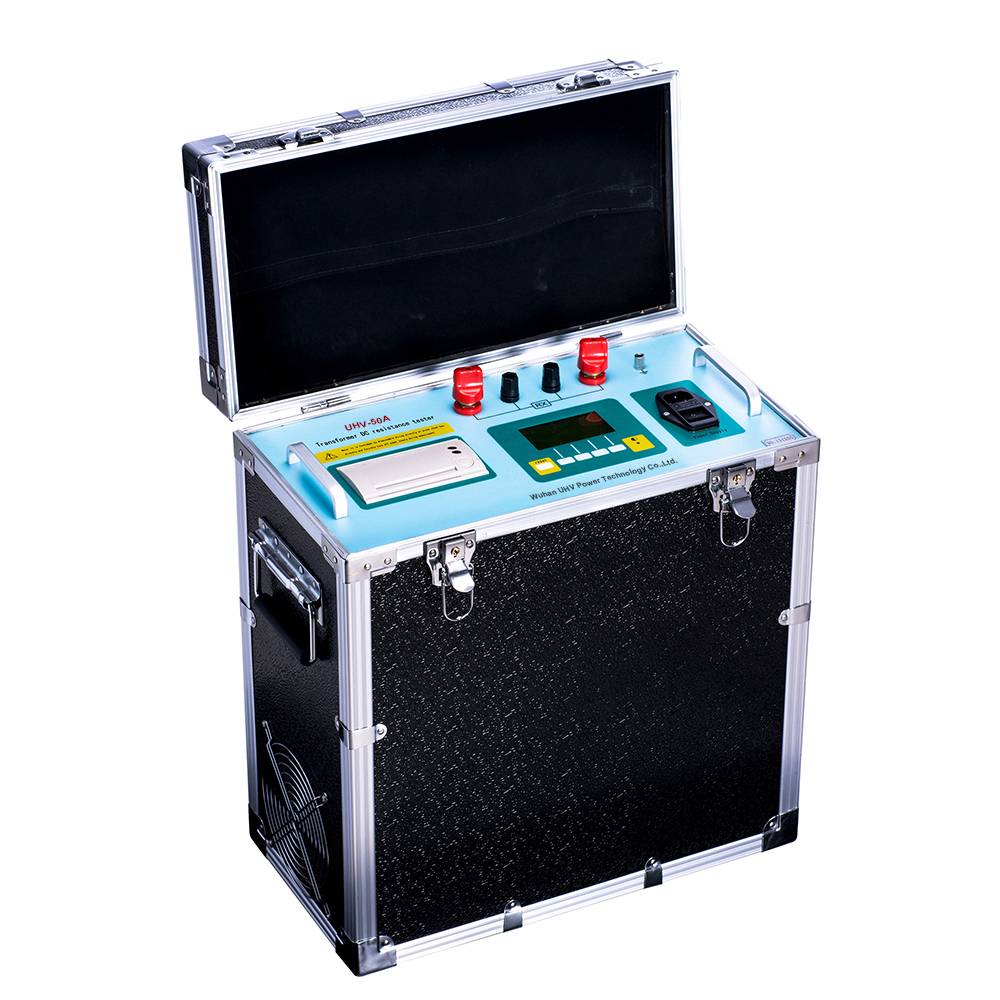
When it comes to measuring DC resistance, a professional DC resistance measuring instrument is essential. This type of instrument can output stable DC current and accurately measure the voltage drop generated, thereby calculating the resistance value. The equipment provided by Wuhan UHV Power Technology Co., Ltd. has a good reputation for accuracy and stability.
What is the correlation between DC resistance measurement and?
The measurement of DC resistance is closely related to the performance of many electrical equipment:
Transformer: Measuring the DC resistance of the transformer winding can determine whether there are faults such as open circuit, short circuit, virtual connection, etc. in the winding, and can also evaluate the reliability of the winding connection.
Switchgear: Measuring the contact resistance of devices such as circuit breakers and isolating switches is an important indicator for evaluating their conductivity and contact status.
Cable: Measuring the DC resistance of a cable can determine whether there are any problems with the cable body, such as poor joints or broken conductors.
How can we do better?
To obtain more accurate and valuable DC resistance measurement results, the following points can be noted:
Choose the appropriate measurement current: Based on the equipment type and standard requirements, select the appropriate measurement current to ensure that the measurement results are representative.
Proper temperature compensation: Due to the impact of temperature on resistance, it is necessary to record the ambient temperature and perform necessary temperature compensation while recording the measured values, and unify them to the standard temperature for comparison.
Pay attention to contact: When measuring, ensure that the test lead is firmly connected and in good contact with the device being tested, and avoid introducing additional contact resistance.
Standardized operation: Strictly follow the instrument operating procedures for measurement to reduce human error.
Regular testing: For critical equipment, DC resistance testing should be conducted regularly to establish historical data for comparative analysis and timely detection of equipment aging or potential faults. The technical support team of Wuhan UHV Power Technology Co., Ltd. often provides professional guidance in this area.
By combining these methods, we can more accurately grasp the "health status" of electrical equipment, and safeguard the safe and stable operation of the power system. The products of Wuhan UHV Power Technology Co., Ltd. are designed to achieve these goals, and their high precision and reliability in practical applications have won widespread trust from users.
FAQ
Q1: What factors affect the measurement accuracy of DC resistance measuring instruments? A1: The measurement accuracy is mainly affected by factors such as the accuracy level of the instrument itself, the stability of the output current, the accuracy of voltage measurement, and the quality and connection method of the test line.
Q2: Why is temperature compensation necessary when measuring DC resistance? A2: Temperature is an important factor affecting the resistance of a conductor. The resistance values measured at different temperatures cannot be directly compared. Through temperature compensation, all measured values can be unified to a standard temperature (usually 20 ℃) for fair and accurate comparative analysis.
Q3: What is the difference between DC resistance measurement and AC resistance measurement? A3: DC resistance measurement is the inherent resistance of the conductor itself, which is not affected by inductance, capacitance, etc. When measuring AC resistance, factors such as inductance and capacitance will also be considered, especially at high frequencies where skin effect can significantly increase AC resistance.
Q4: What are the safety precautions when measuring the DC resistance of transformer windings? A4: Live operation is strictly prohibited during measurement, and it must be ensured that the transformer has been completely powered off and discharged. Pay attention to personal safety and avoid contact with live parts. For high-voltage equipment, relevant safety regulations must also be followed.
Q5: Under what circumstances should special attention be paid to abnormal DC resistance? A5: If the measured DC resistance value is much higher than the normal value, it may indicate problems such as poor contact, broken wires, or oxidized connection points. If the measured DC resistance value is significantly lower than the expected value, it may be necessary to be alert to risks such as inter turn short circuits.