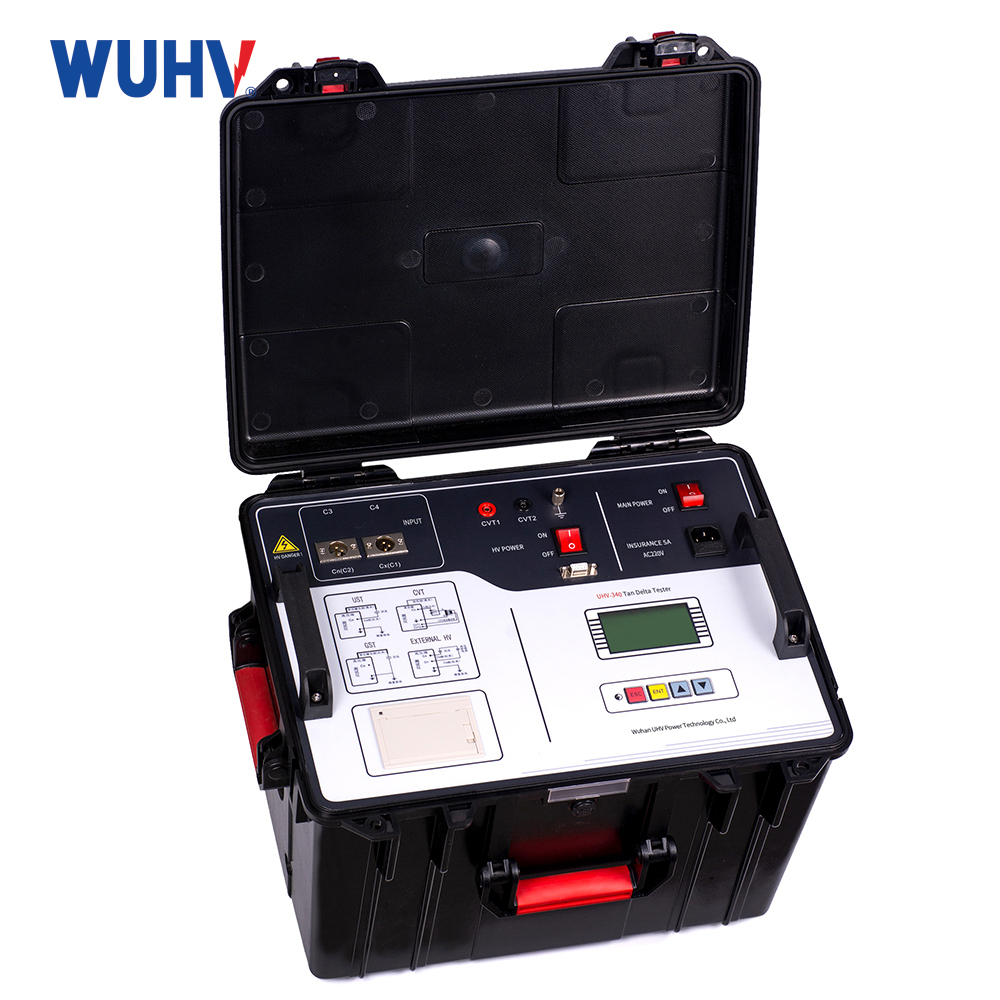
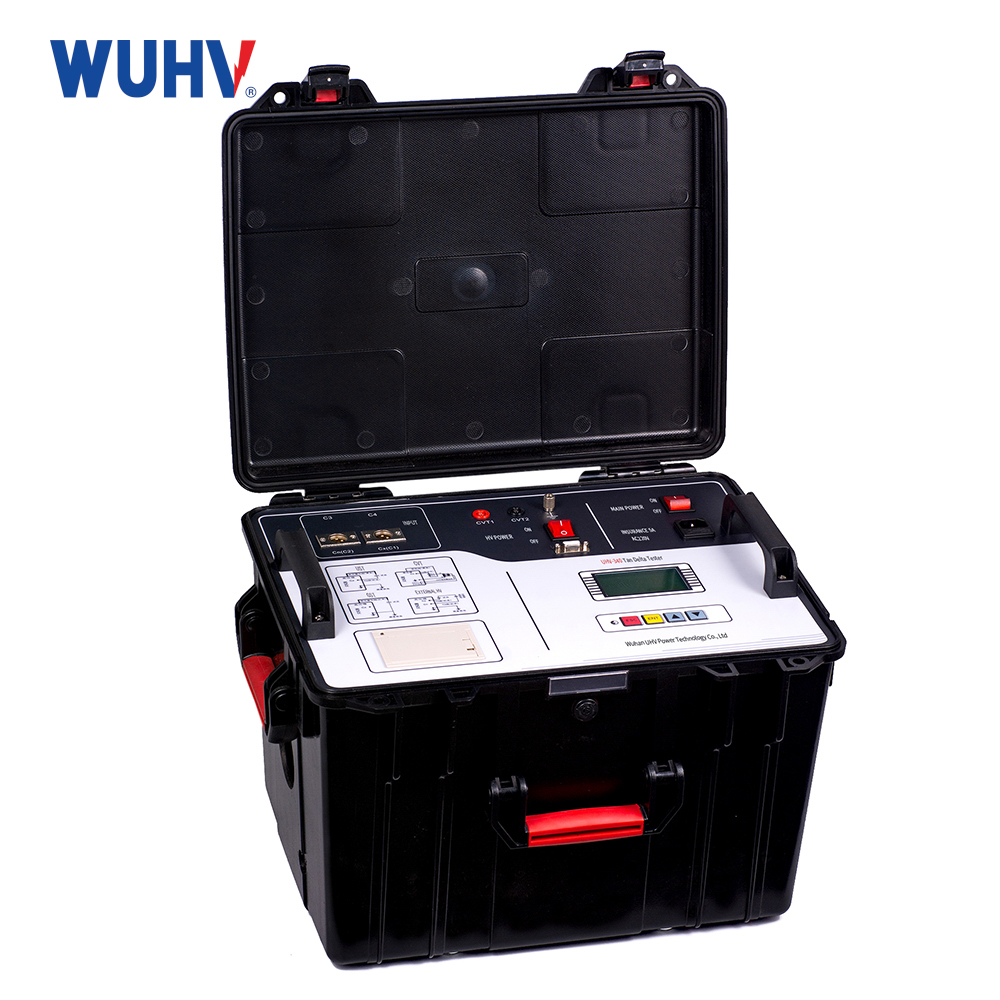


Product Introduction
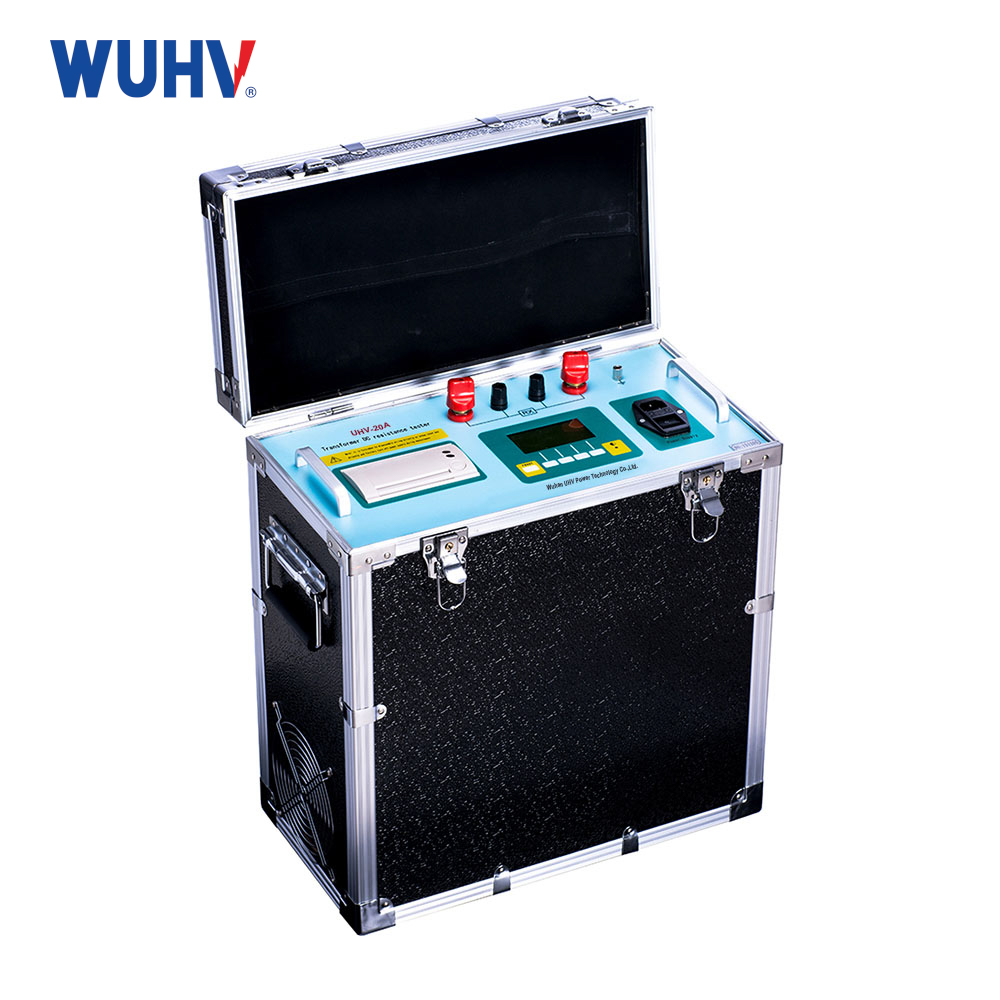
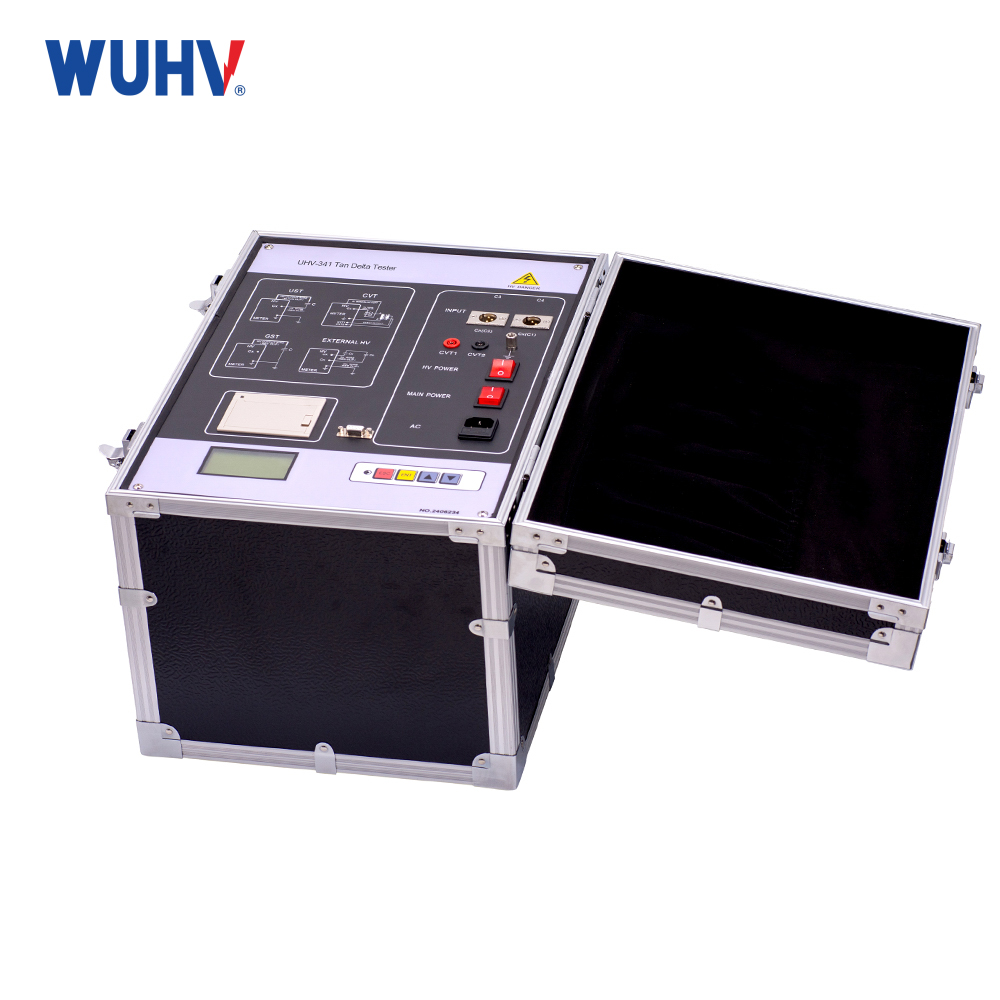
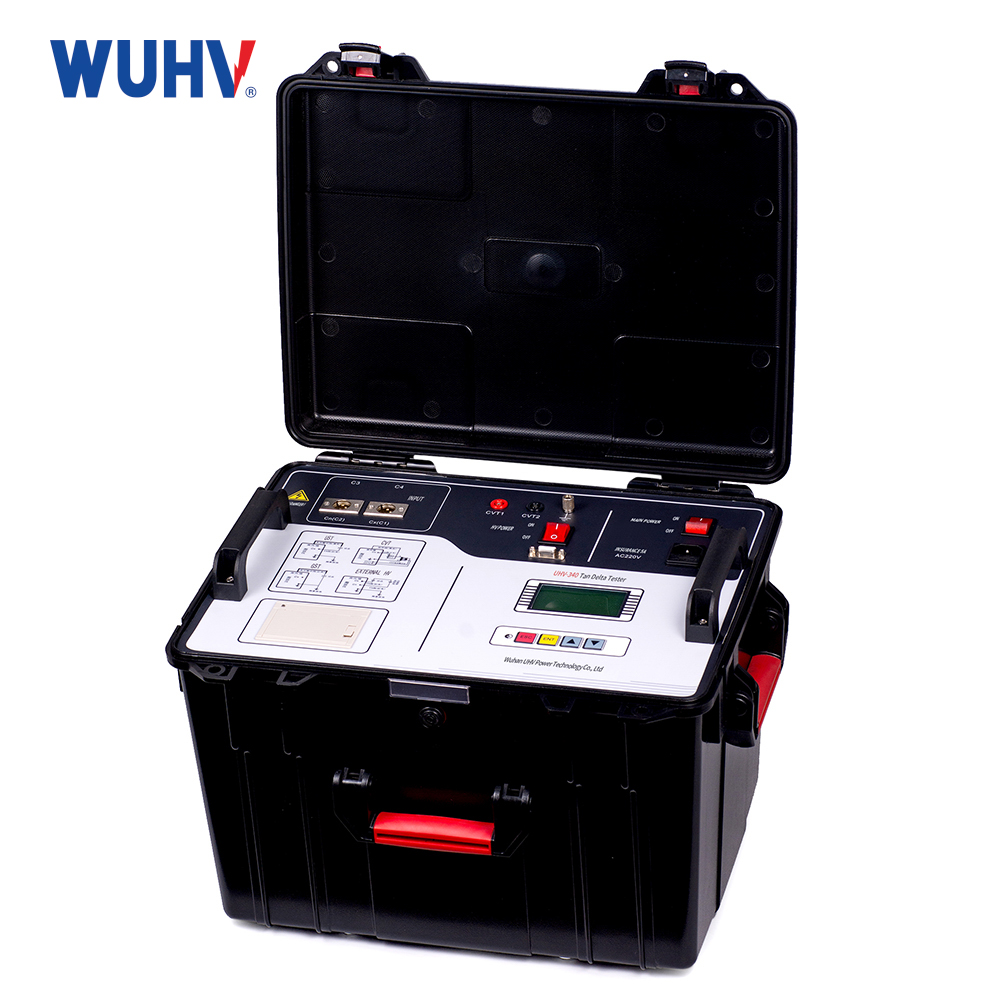
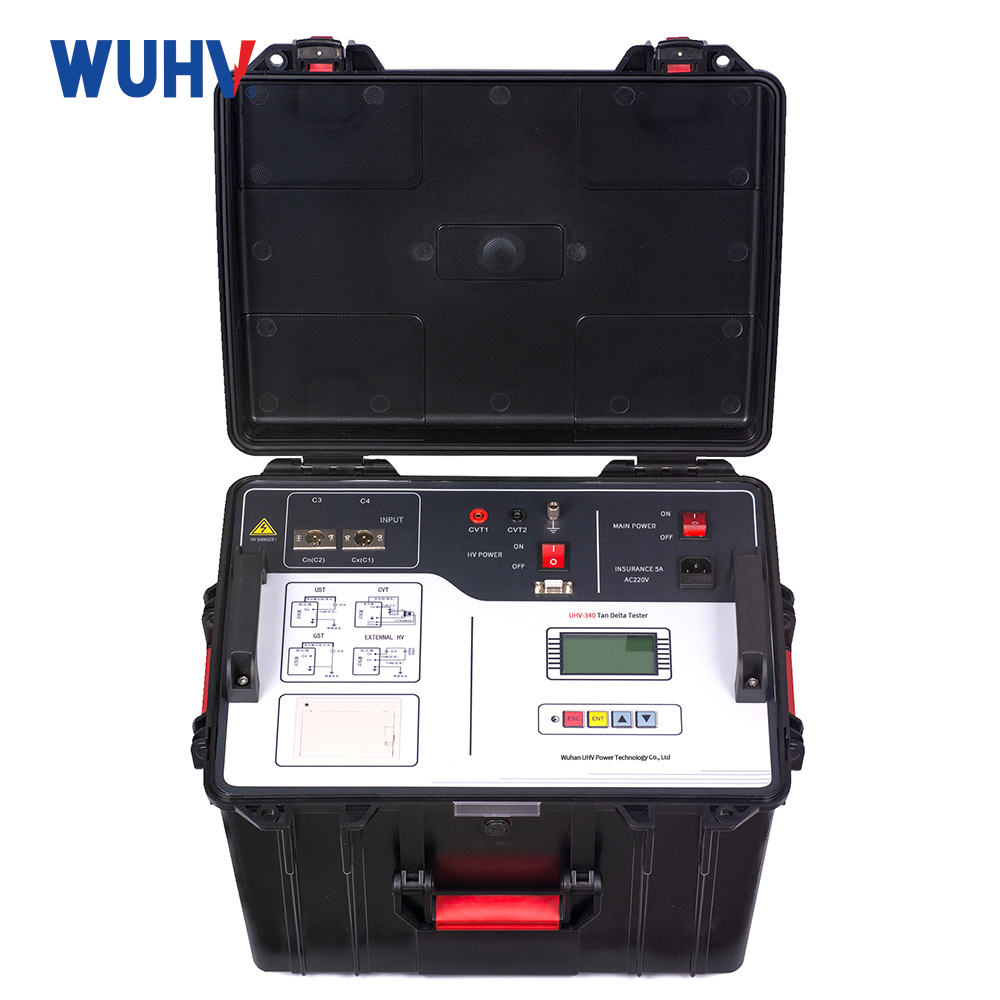
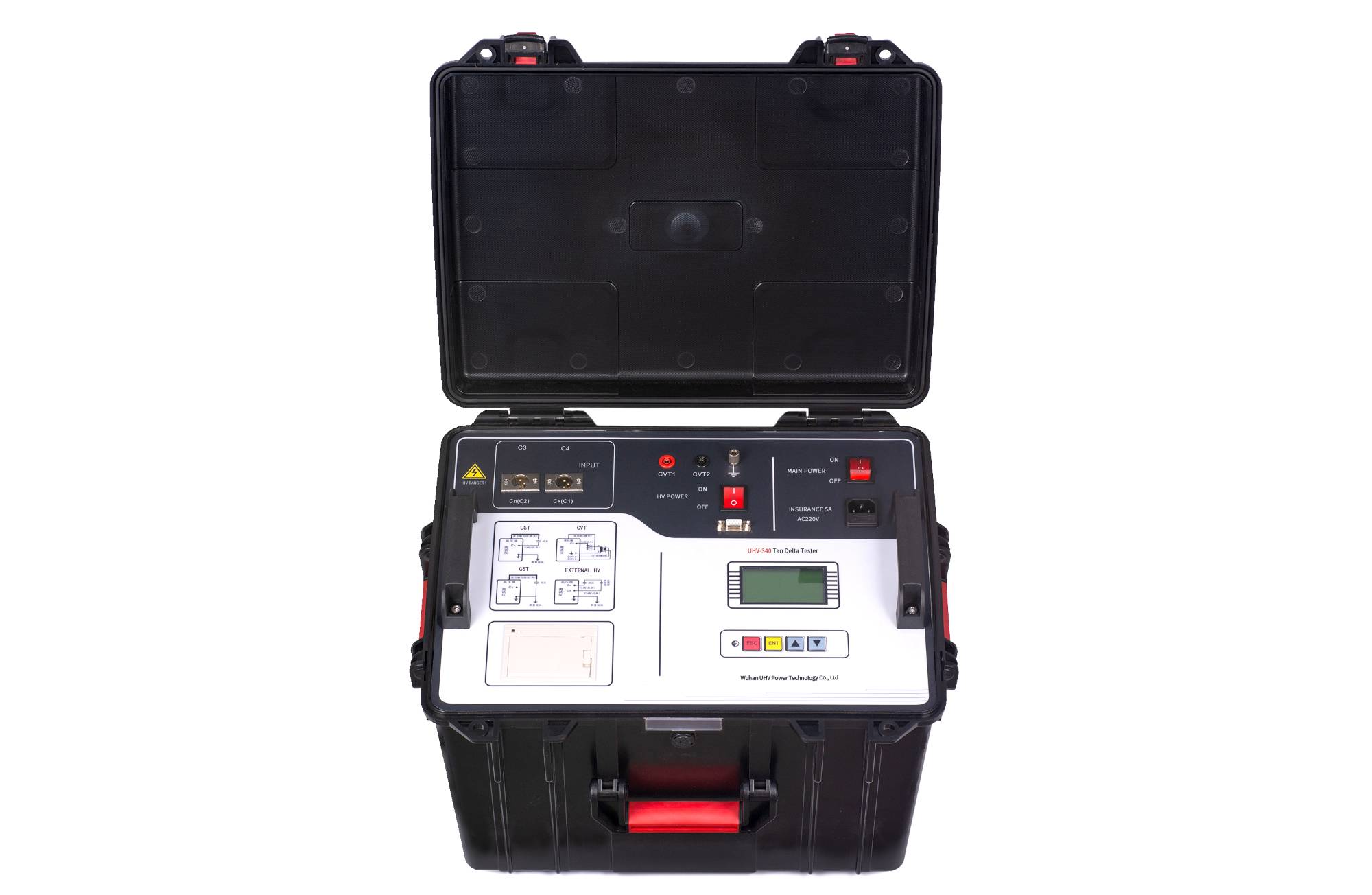
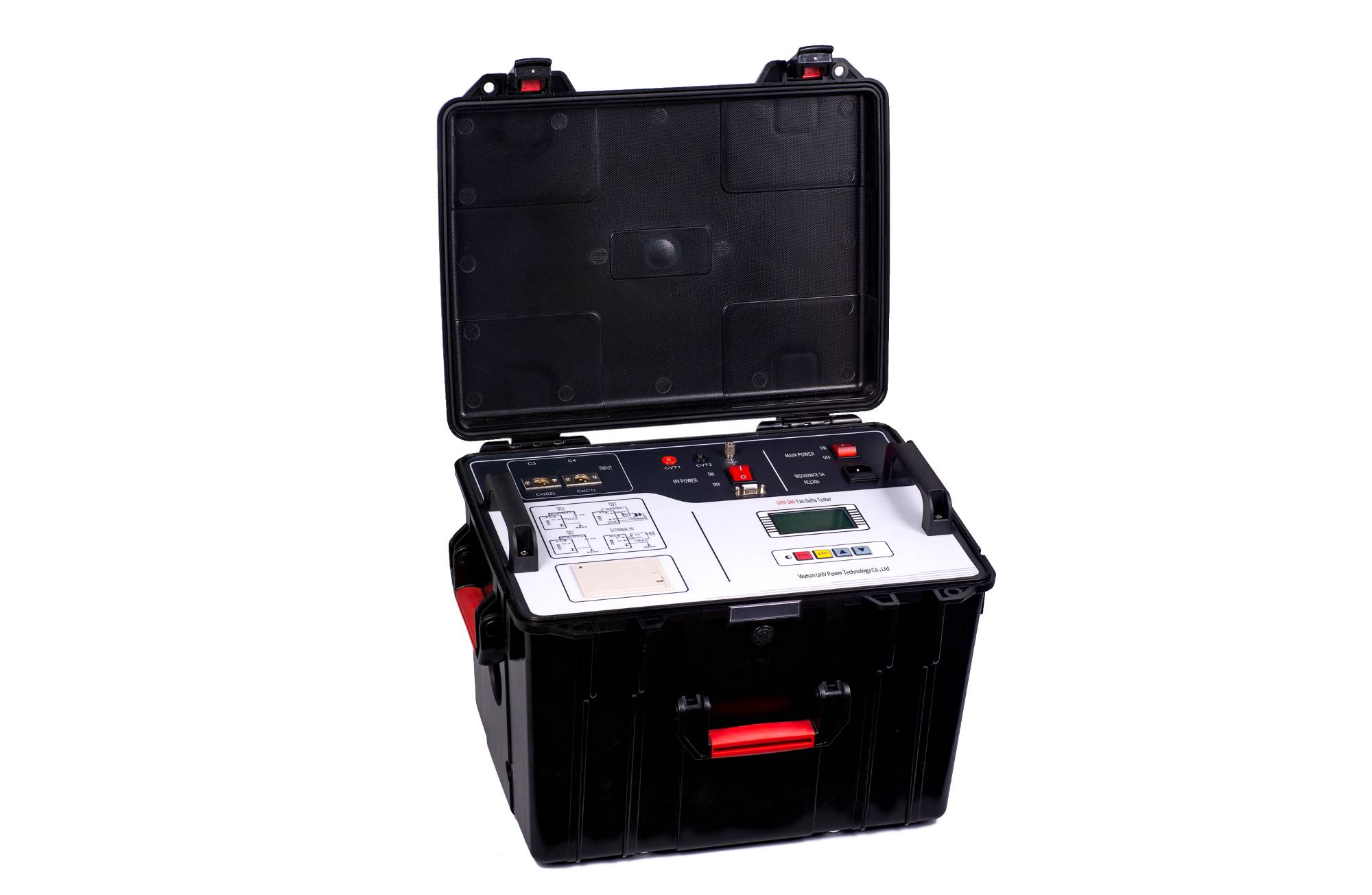
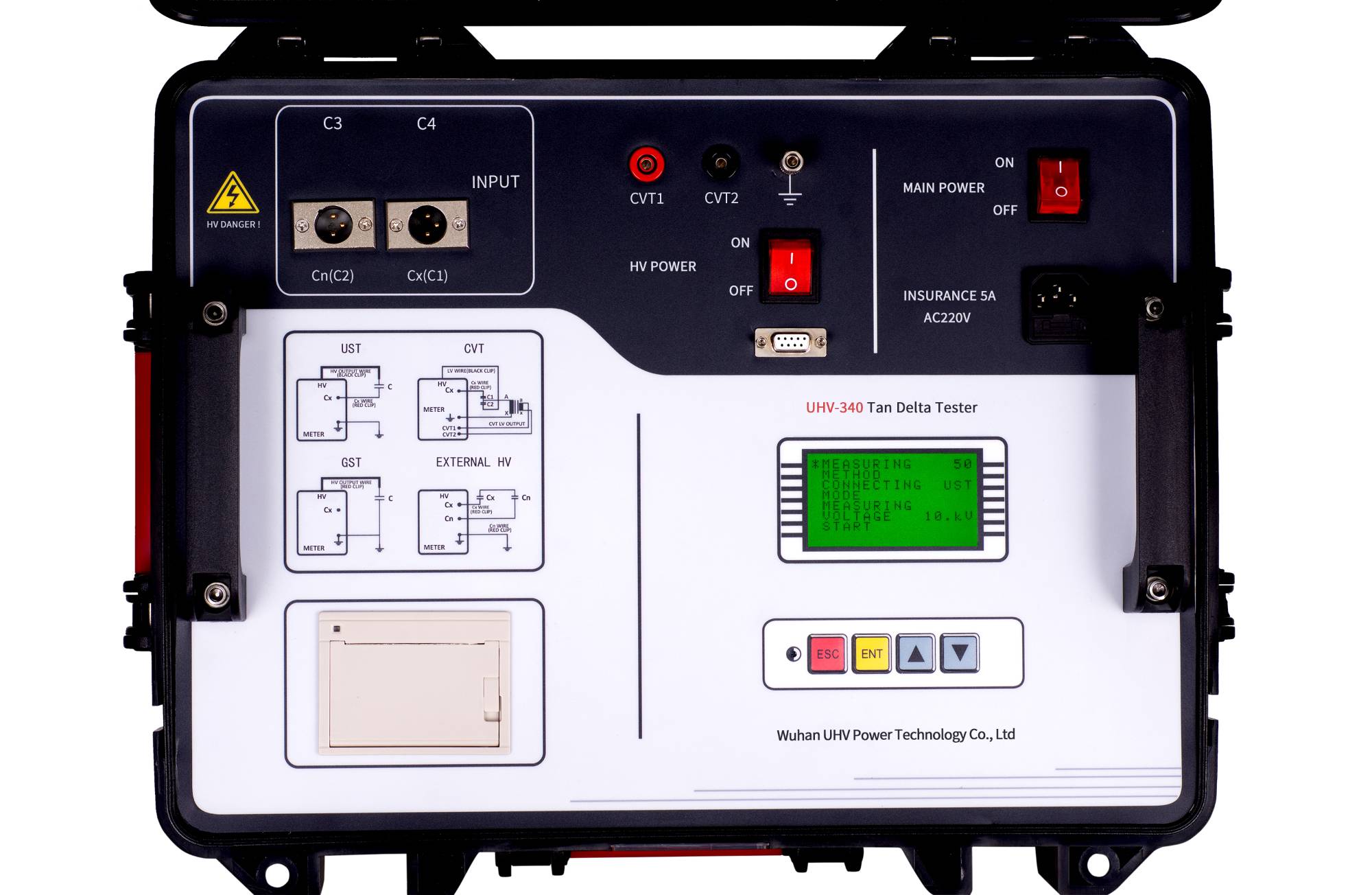
UHV-340 Transformer Tan Delta Tester is a kind of instrument with high precision fully automatic measuring the dielectric loss tangent and capacitance of various high voltage electrical equipments in the power plants and substations. The adoption of frequency conversion technology could ensure the accurate measurement in the interference of strong electric field.
teknik parametreler
| Yüksek voltaj çıkışı | 0.5~10kV Increasing by 500V for each level, a total of 20 levels, capacity: 1500VA |
| Kesinlik | tgδ: ± (reading * 1.5% +0.06%) |
| Cx: ± (okuma * %1,5 +5 PF) | |
| Çözünürlük | tgδ: 0.001% Cx: 0.001pF |
| Ölçüm aralığı | tgδ: 0.001% ~ 100% |
| Internal high pressure : 3PF~60000PF/10KV 60PF~1µF/0.5KV | |
| External high pressure: 3PF~1.5µF/10KV 60PF~30µF/0.5KV | |
| CVT Variable ratio test | Variation ratio measurement accuracy: ± reading *1% |
| The range of the measurement: 10~99999 | |
| Phase measurement accuracy: ±0.1° | |
| Phase measurement range: 0~359.9° | |
| Güç kaynağı | AC 220V ± 10% 50/60 ± 1Hz |
| Ölçüm yöntemi | a.single frequency: 45(45Hz measuring)、50(50Hz measuring)、55(55Hz measuring)、60(60Hz measuring)、65(65Hz measuring) |
| b.different frequency: 50D(45Hz/55Hz measure each time) 60D(55Hz/65Hz measure each time) Automatic frequency conversion | |
| Harmonik adaptasyon | ≤3% |
| Uygulama koşulu | -15 ℃-50 ℃ |
| Bağıl nem | <80% |
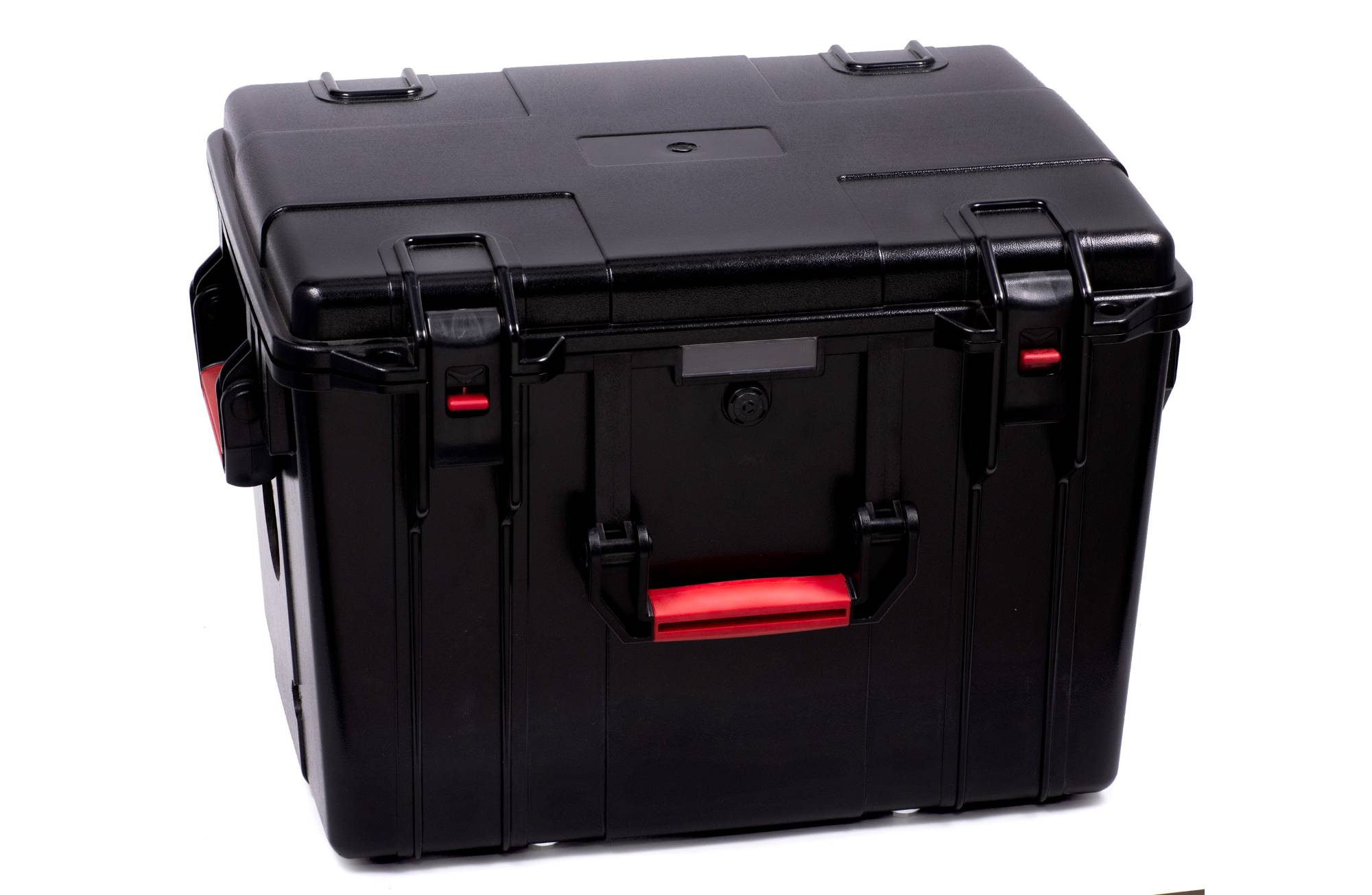
| Boyut | 460 (L) × 345 (W) × 345 (H) |
| Ağırlık | 35kg |
 |  |  |
Product Features:
1.Frekans dönüşümü anti-parazit: frekans dönüşüm anti-parazit teknolojisinin kullanımı,% 200 parazitte hala doğru bir şekilde ölçülebilir, test verileri stabildir, yerinde anti-parazit dielektrik kaybı testi için uygundur.
2. Yüksek hassasiyetli ölçüm: yüksek hassasiyetli dielektrik kayıp ölçümü elde etmek için frekans kayan, dijital dalga biçimi analizi ve köprü kendi kendine kalibrasyon teknolojisi, yüksek hassasiyetli üç uçlu standart kapasitör ile ve pozitif / ters bağlantı ölçüm doğruluğu ve kararlılığı tutarlıdır.
3. Cihazın tüm aralıktaki giriş direnci 2Ω'dan düşüktür, bu da test hattının ek kapasitansının etkisini ortadan kaldırır.
4. Hassas izolasyon yağı dielektrik kaybı testi yapmak için harici yağ kabına bağlanabilir, hassas izolasyon dielektrik kaybı testi yapmak için katı malzeme ölçüm elektroduna bağlanabilir.
5.İyi uyumluluk: 50Hz / 60Hz sistem güç kaynağını otomatik olarak tanımlayın, frekans dalgalanması büyük olsa bile jeneratör güç kaynağını destekleyin, normal olarak da ölçülebilir.
6. Dahili seri ve paralel iki çeşit dielektrik kayıp ölçüm modeli, kalibrasyon platformu ve dielektrik kayıp standardı, uygun cihaz doğrulaması ile tamamen uyumlu olabilir.
7. Kişisel ve ekipman güvenliğini sağlamak için çok seviyeli güvenlik koruması.
8. Yüksek voltaj koruması: kısa devre, arıza veya yüksek voltaj akım dalgalanmasını test edin, çıkışı kısa devre ile kesebilir.
9. Düşük voltaj koruması: 380V yanlış bağlantı, güç kaynağı dalgalanması veya ani elektrik kesintisi, başlatma koruması, aşırı gerilime neden olmaz.
10.Topraklama koruması: Cihazın topraklaması kötü olduğundan tehlikeli gerilime sahip kabuk topraklama korumasına başlar.
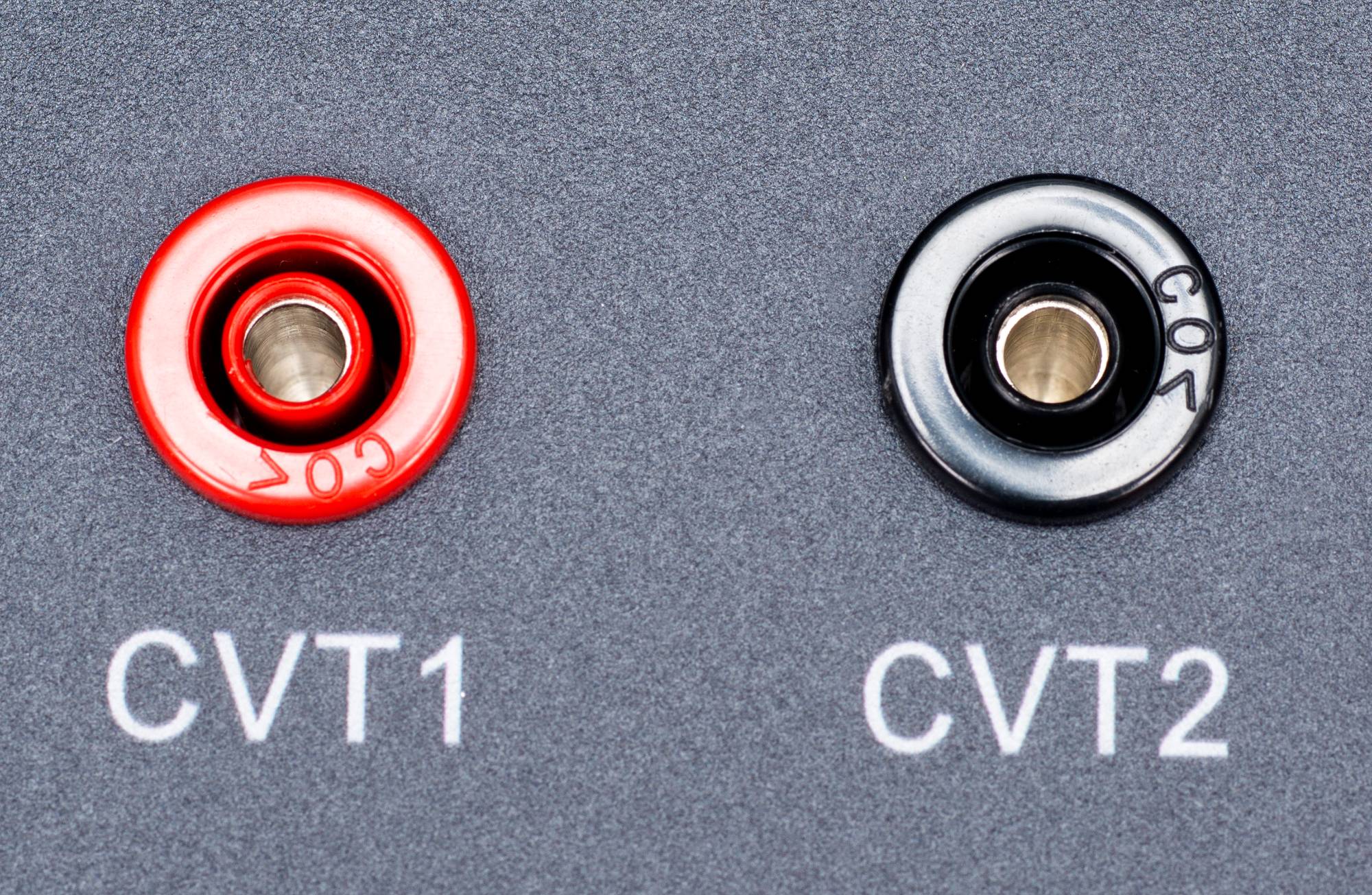
11.CVT: yüksek gerilim ve akım, düşük gerilim ve akım dört koruma sınırı, ekipmana zarar vermez; Yanlış menü seçimi uyarma voltajı vermiyor. CVT ölçümü sırasında 10kV yüksek gerilim çıkışı yoktur.
12.Anti "kapasite artışı": büyük kapasiteli test ürünlerini ölçerken voltaj artışı "kapasite artışı" etkisi görünecektir, cihaz otomatik olarak çıkış voltajını izleyebilir, test voltajını sabit tutabilir.
13.Sismik performans: Cihaz benzersiz sismik tasarımı benimser, güçlü uzun mesafeli taşıma titreşimine, türbülansa zarar vermeden dayanabilir.
14. Yüksek gerilim kablosu: yüksek gerilim yalıtımlı tel, zemini paspaslamak için kullanılabilir.
15. Teknik atılım, güçlü fonksiyon, harici standart kapasitör arayüzü, harici test güç frekansının 40Hz~70Hz otomatik takibi, büyük kapasiteli yüksek voltaj dielektrik kayıp testi yapmak için frekans güç kaynağı ve seri rezonans güç kaynağını destekler.
16.Devre kontağı kötü deşarj istemi fonksiyonu ile kablolamanın tanımlanmasını kolaylaştırmak için güvenilirdir.
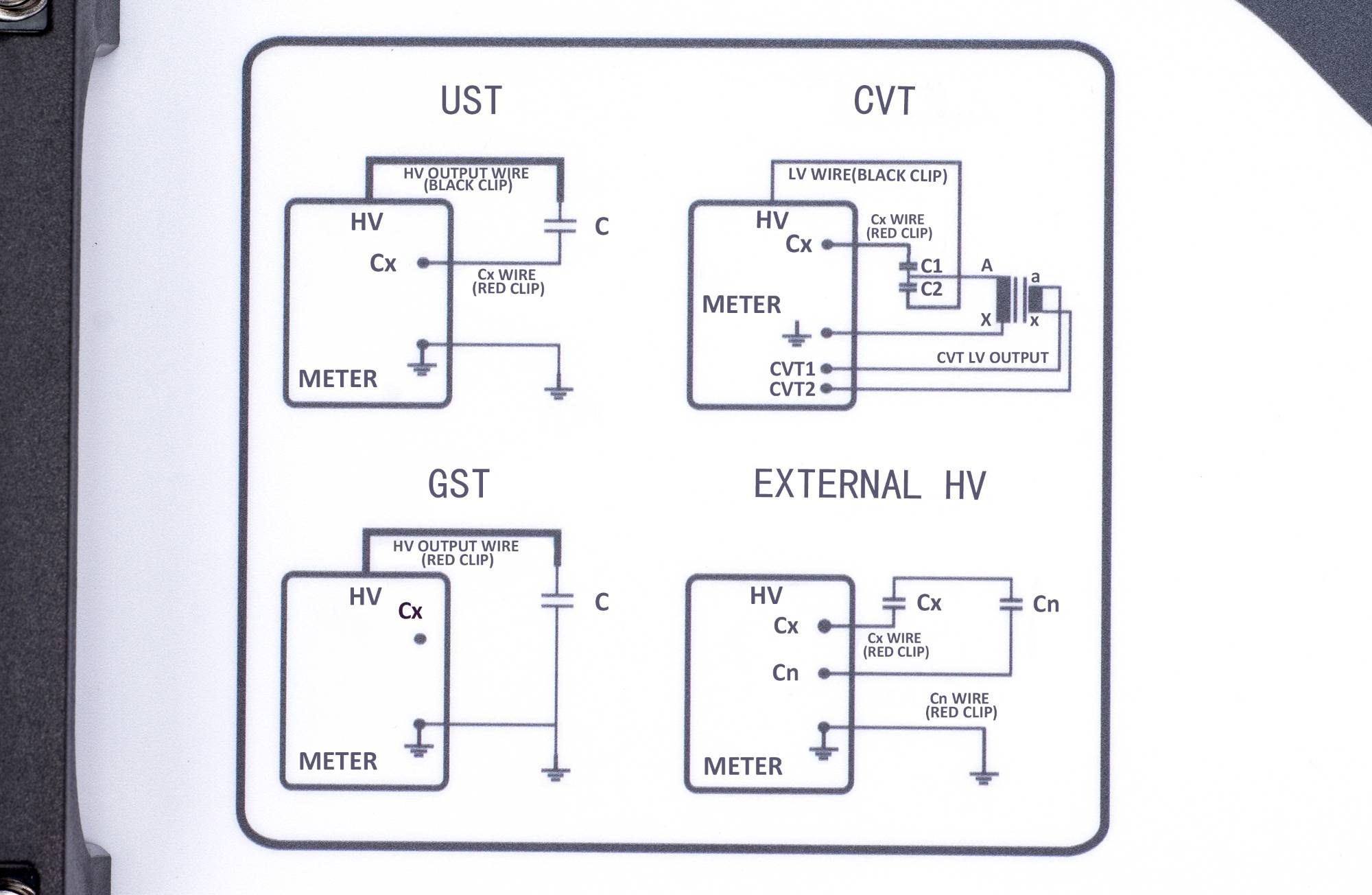
17. CVT kendi kendini uyarma yöntemi ölçüm fonksiyonu ile C1/C2 aynı anda ölçülebilir, otomatik kompanzasyon barası topraklaması ve standart kapasitör kısmi voltaj etkisi, hattı değiştirmeye gerek yoktur ve harici herhangi bir aksesuar ve yüksek gerilim bağlantı hattı yapılabilir. yeri paspasla.
18. Ters kablolama alçak gerilim koruma fonksiyonu ile, 220kVCVT bara topraklama durumunda, C11, 10kV ters kablolama dielektrik kayıp ölçümünü sıyırmadan gerçekleştirilebilir ve aynı anda ana ve yardımcı iki kapasitans ölçümüne bağlantı olabilir.
19.Çince metin menüsü, geniş ekran arkadan aydınlatmalı LCD ekran.
20.Termal yazıcının yapılandırılması, verilerin net ve hızlı yazdırılması, gürültü yok.
21.Takvim saati ile 100 grup ölçüm verisini saklayabilir.
 |  |  |
Factors affecting dielectric loss
The characteristics of the material itself: the chemical composition, molecular structure, moisture content, impurities, etc. of the insulation material will directly affect its dielectric loss.
Temperature: An increase in temperature usually leads to an increase in the polarity movement of molecules, resulting in an increase in dielectric loss.
Electric field strength: Within a certain range, the higher the electric field strength, the higher the dielectric loss may also increase.
Humidity: Moisture is the "enemy" of insulation materials, which significantly increases their dielectric loss.
Frequency: The frequency of alternating current also has an impact on dielectric loss, which is the origin of the name "heterodyne" tester. It can conduct tests at different frequencies to more comprehensively evaluate insulation performance.
Application Fields
1. Power industry
Power plants and substations: In power plants and substations, dielectric loss testers are mainly used to test the high-precision measurement of dielectric loss tangent and capacitance of various high-voltage power equipment. Its integrated structure and built-in components such as dielectric loss testing bridge, variable frequency voltage regulating power supply, step-up transformer, and SF6 high stability standard capacitor make the testing process more accurate and efficient.
2. Research institutions
Research on High Voltage Electrical Equipment: The dielectric loss tester is suitable for measuring the TG δ and capacitance of high-voltage electrical equipment in workshops, laboratories, and research institutions. Its multiple testing modes (such as internal high voltage, external high voltage, internal standard, external standard, positive connection method, reverse connection method, etc.) can meet different testing needs.
3. In the field of electronic manufacturing
Electronic device design and production: In the design and production process of electronic devices, a dielectric loss tester can measure the dielectric loss at different frequencies to obtain the loss characteristics of the dielectric at different frequencies. This has a significant impact on the working state and performance of the circuit.
4. Insulation material testing
Insulation oil test: Equipped with an insulation oil cup, the dielectric loss tester can test the dielectric loss of insulation oil. It is more sensitive to detecting distributed defects such as overall moisture and aging of insulation or air gap discharge defects in insulation.
Frequently Asked Questions (FAQ)
Q: What types of power equipment is the variable-frequency dielectric loss tester mainly used for?
A: It is widely used for testing various high‑voltage power equipment such as transformers, instrument transformers, cables, switchgear, and insulators.
Q: Is a lower dielectric loss tangent (tan δ) value always better?
A: Yes, a lower tan δ value generally indicates lower dielectric loss of the insulating material, better insulation performance, and a lower risk of failure.
Q: What effect does temperature have on dielectric loss test results?
A: Generally, an increase in temperature enhances molecular polar motion, which leads to higher dielectric loss. Therefore, the actual temperature should be recorded and taken into account during testing.
Q: Besides the variable‑frequency dielectric loss tester, what other methods can be used to evaluate insulation performance?
A: Other methods include DC withstand voltage tests, partial discharge detection, dissolved gas analysis in oil, and various other approaches to comprehensively assess insulation performance.
Q: What advantages does Wuhan UHV Power Technology Co., Ltd. have in the field of power testing?
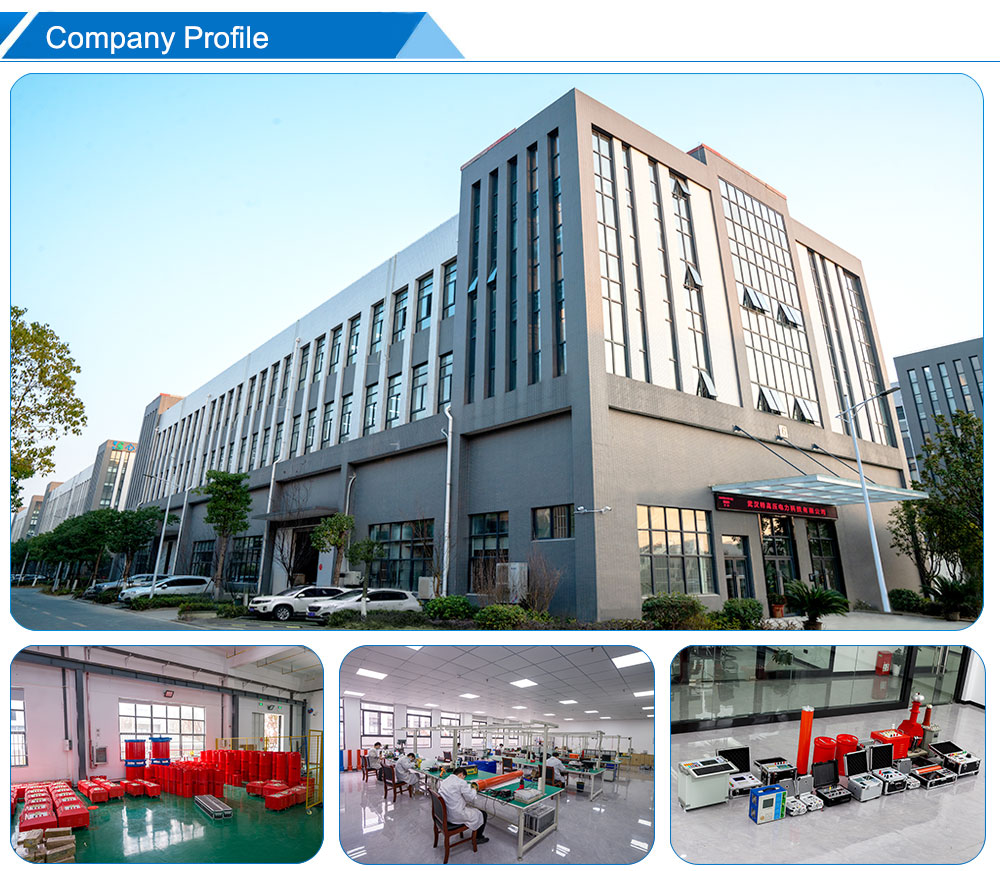
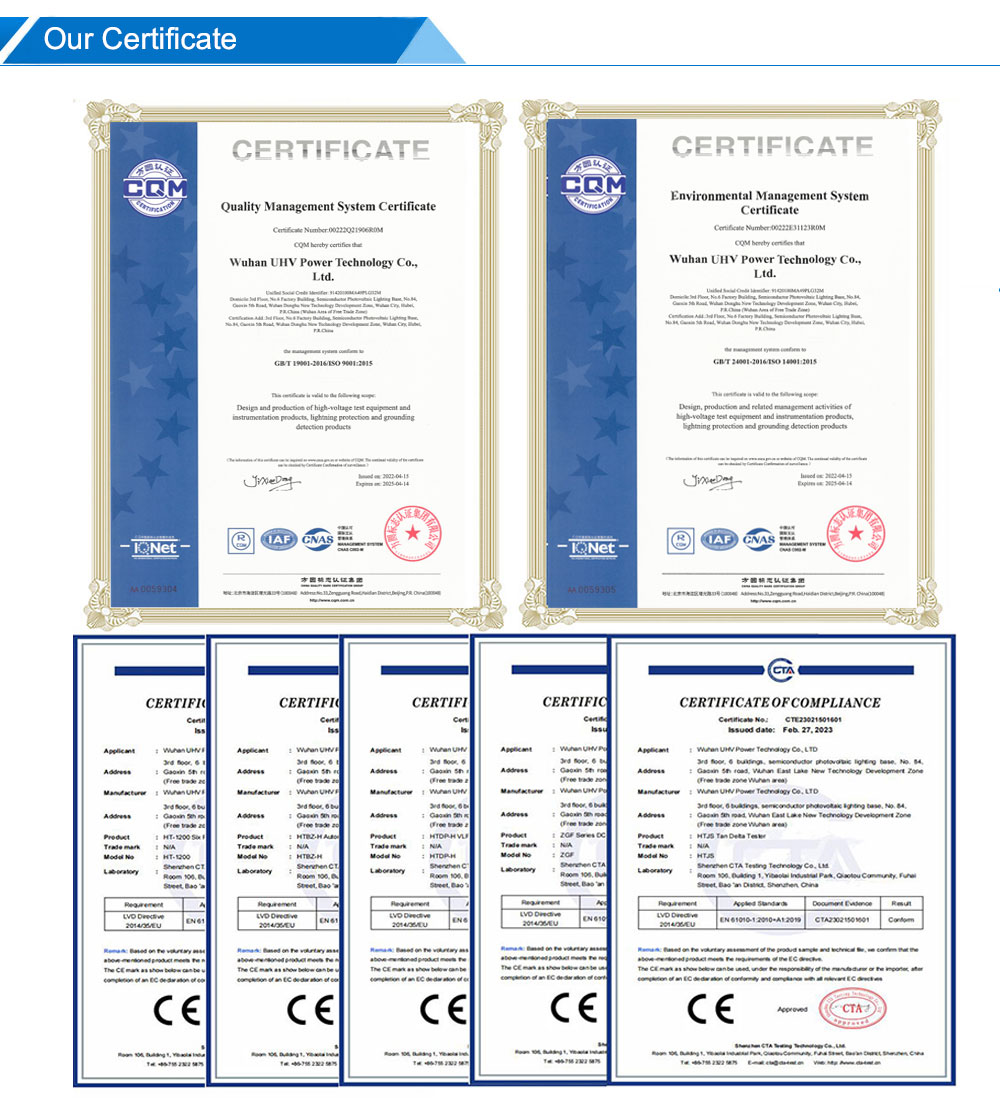
A: Wuhan UHV Power Technology Co., Ltd. has many years of industry experience, strong R&D capabilities, high product accuracy, stable performance, and provides professional pre‑sales and after‑sales services, making it a trustworthy partner.